Table of Content
Title
ER Machining, provides emergency machining services on any request.
Fast turnaround! · Call or email us!
Contact Us!
Why Titanium Is Dominant in Aerospace CNC Machining
3d Printing
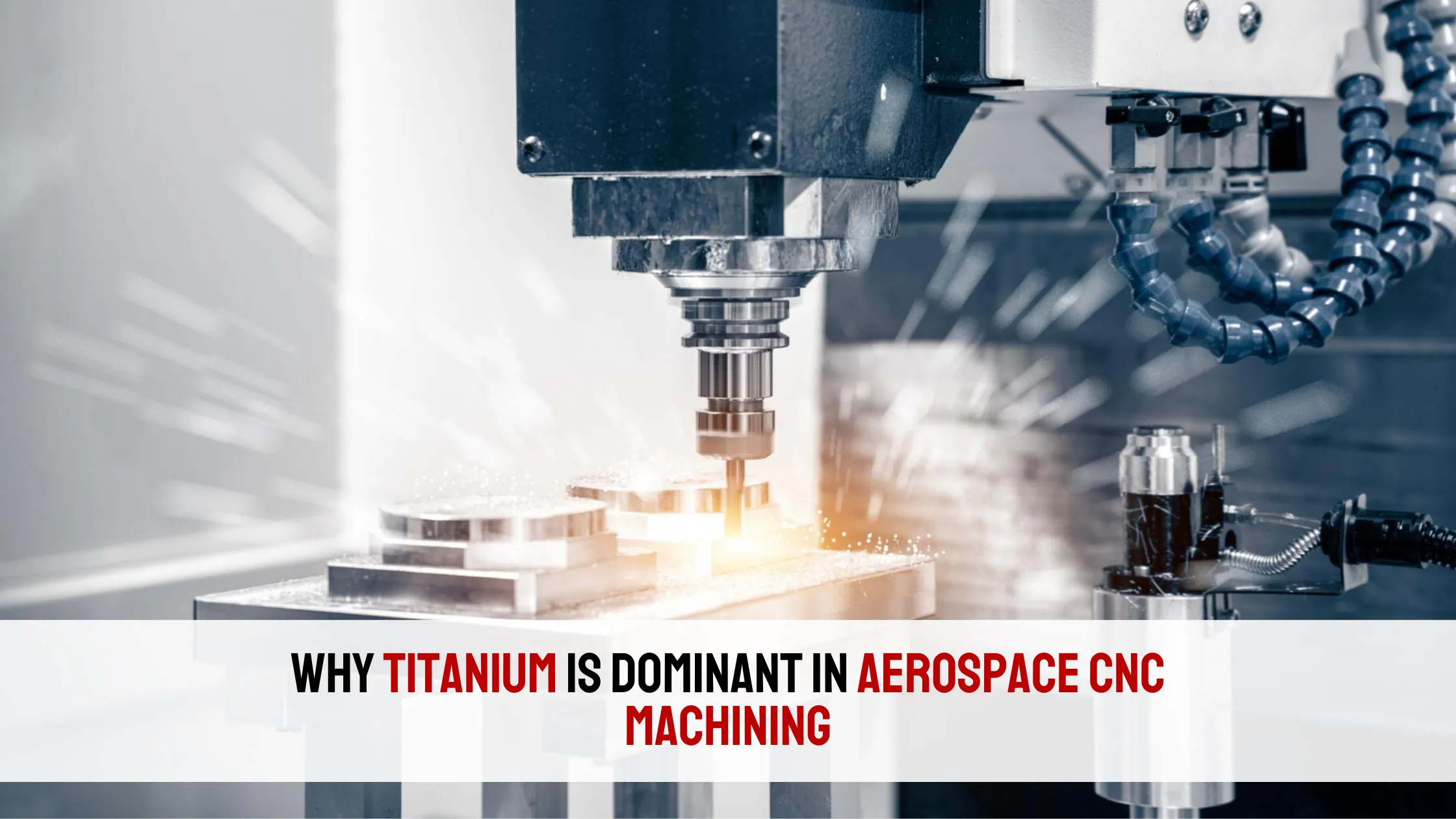
Quick Answer: Titanium dominates aerospace CNC machining because it delivers an exceptional strength-to-weight ratio, outstanding corrosion resistance, and reliable performance at elevated temperatures. Grades like Ti-6Al-4V are used across structural frames, engine components, and fasteners in commercial and military aircraft. Its properties match aerospace demands precisely, which is why titanium has become the default choice for flight-critical CNC machined parts.
Aluminum gets the headlines. Carbon fiber gets the press releases. But if you spend any time around aerospace manufacturing, you quickly realize that titanium is the material doing the quiet, unglamorous, absolutely critical work.
Structural brackets. Bulkheads. Engine mounts. Landing gear components. The parts that cannot fail, that carry real load, that see heat and vibration cycle after cycle, are typically titanium. And they get there through aerospace CNC machining, which is the only process precise enough to hold the tolerances these applications demand.
Here's what makes titanium the dominant material in aerospace CNC machining, and why that's not going to change anytime soon.
The Strength-to-Weight Ratio That Changes Everything
Titanium is defined as a transition metal with an atomic number of 22, but in aerospace, it's defined by one number: its strength-to-weight ratio. Titanium is roughly 45% lighter than steel while maintaining comparable tensile strength. In a field where every pound of unnecessary weight translates directly to fuel cost and payload reduction over a lifetime of flights, that tradeoff is transformative.
Compare this to aluminum alloys, which are lighter but significantly weaker under cyclic load. Compare it to Inconel, which handles heat brilliantly but adds mass. Titanium sits in a specific performance window that neither of these materials occupies, which is why aerospace engineers reach for it when structural integrity and minimal weight must coexist in the same part.
This property directly drives demand for precision aerospace CNC machining. You can only take advantage of titanium's strength-to-weight ratio if the finished part is machined to exact specifications. A titanium bracket with poor dimensional accuracy is just an expensive scrap.

Ti-6Al-4V: The Alloy That Built Modern Aircraft
Not all titanium is equal. The grade used in the vast majority of CNC machined aerospace parts is Ti-6Al-4V, an alpha-beta alloy composed of titanium, aluminum, and vanadium. Ti-6Al-4V is used by manufacturers like Boeing and Airbus because it combines high tensile strength (around 950 MPa), good machinability relative to pure titanium, and predictable behavior under heat treatment.
This is the material our team machines most often for aerospace customers. And this is where machining expertise genuinely matters. Ti-6Al-4V has a low thermal conductivity, which means heat generated during cutting tends to stay at the tool-workpiece interface rather than dissipating into the part. Without the right cutting parameters, tool wear accelerates fast. Speeds and feeds must be dialed precisely; coolant strategy has to be correct, and toolpath programming matters more than it does with softer metals.
Here's the thing most people miss titanium isn't difficult to machine because it's hard. It's difficult because it's thermally challenging. A machinist who understands that distinction produces better parts with less tool consumption.
Corrosion Resistance That Outlasts the Aircraft
Aerospace structures operate in environments that would destroy most metals. Salt spray at altitude, hydraulic fluid exposure, temperature cycling from ground-level heat to high-altitude cold. Titanium handles all of it because it forms a stable, self-repairing oxide layer on its surface almost instantly when exposed to air.
This passive oxide layer is what gives titanium its corrosion resistance. It's also why titanium CNC machined parts often require no additional coating or surface treatment for structural applications. That reduces total part cost and eliminates a processing step that can introduce variability.
For aerospace manufacturers, fewer process steps means fewer failure modes. That matters when you're certifying parts to AS9100 or other quality standards where documentation and traceability follow every machined component through its entire lifecycle.
How Aerospace CNC Machining Handles Titanium's Demands
Machining titanium for aerospace applications isn't just about having the right material. It requires a specific combination of equipment capability, process knowledge, and quality verification that not every CNC machine shop can deliver.
Multi-axis CNC milling is essential for complex titanium components. Aerospace parts rarely have simple geometries. Engine brackets, structural nodes, and mounting hardware often require 4-axis or 5-axis machining to reach all features without repositioning the workpiece multiple times. Every repositioning introduces potential error. Multi-axis machining holds tighter tolerances by reducing setups.
Our CNC milling services and CNC turning services are both equipped to handle titanium alloys across a range of part geometries, from rotational components that need turning to complex structural profiles that require full multi-axis milling. For customers who need precision machining services on flight-critical components, that capability combination matters.
Titanium vs. Aluminum in Aerospace CNC Machining
Engineers sometimes debate whether titanium or aluminum alloys are the better choice for a given aerospace application. The honest answer is that they serve different roles.
Aluminum is faster and cheaper to machine. For non-structural interior components, fairings, or low-load brackets, aluminum often makes more sense economically. It's easier on tooling and cuts at higher speeds, which brings down machining cycle time and cost per part.
Titanium becomes the right answer when the part sees significant mechanical load, operates near heat sources, or needs to survive decades of fatigue cycling. Landing gear components, engine pylons, and primary structural members are titanium precisely because aluminum would fail under those conditions over time.
The key is matching material selection to actual loading and environmental conditions, not defaulting to one material for everything. That's a conversation worth having with your machining team before committing to a material on a new aerospace program.
What to Expect From a Qualified Aerospace CNC Machining Partner
Aerospace parts aren't commodity machining work. The requirements around tolerances, traceability, and material certification are specific, and working with a shop that understands those requirements saves significant rework and qualification time.
At ER Machining, our machinists and mechanical engineers work directly with aerospace customers from quote through delivery. We review designs for manufacturability before cutting begins, which means problems get caught before they become expensive. Our quality inspection process verifies every part dimensionally before it ships, and we maintain full documentation to support your quality system requirements.
Whether you're producing a one-off prototype to validate a new design or running production quantities of a qualified part, our precision machining capabilities are built to handle titanium aerospace parts at the level of accuracy these applications require.
Frequently Asked Questions
Q: Why is titanium used in aerospace CNC machining instead of steel?
A: Titanium offers comparable strength to steel at roughly 45% less weight, which directly reduces aircraft mass and fuel consumption. Steel is also more prone to corrosion in aerospace environments, while titanium's passive oxide layer provides long-term protection without coatings.
Q: What titanium grade is most common in aerospace CNC machined parts?
A: Ti-6Al-4V is the most widely used grade for CNC machined aerospace parts. It balances high tensile strength, moderate machinability, and reliable fatigue performance under the loading conditions typical in aircraft structures and engine components.
Q: Is titanium harder to machine than aluminum?
A: Yes, titanium is significantly more challenging to machine than aluminum. Its low thermal conductivity causes heat to build up at the cutting tool rather than dissipating through the part, which accelerates tool wear. Proper speeds, feeds, and coolant strategy are essential for good results.
Q: What CNC processes are used for aerospace titanium parts?
A: Multi-axis CNC milling and CNC turning are the primary processes. Complex structural components typically require 4-axis or 5-axis milling to achieve all features in fewer setups, which improves dimensional accuracy and reduces cycle time.
Q: Can ER Machining produce titanium aerospace parts from prototype to production?
A: Yes. ER Machining handles titanium aerospace parts across the full volume range, from single prototypes to high-volume production runs, with quality inspection and documentation at every stage. Contact us for a quote on your next aerospace machining project.
Quick Answer: Titanium dominates aerospace CNC machining because it delivers an exceptional strength-to-weight ratio, outstanding corrosion resistance, and reliable performance at elevated temperatures. Grades like Ti-6Al-4V are used across structural frames, engine components, and fasteners in commercial and military aircraft. Its properties match aerospace demands precisely, which is why titanium has become the default choice for flight-critical CNC machined parts.
Aluminum gets the headlines. Carbon fiber gets the press releases. But if you spend any time around aerospace manufacturing, you quickly realize that titanium is the material doing the quiet, unglamorous, absolutely critical work.
Structural brackets. Bulkheads. Engine mounts. Landing gear components. The parts that cannot fail, that carry real load, that see heat and vibration cycle after cycle, are typically titanium. And they get there through aerospace CNC machining, which is the only process precise enough to hold the tolerances these applications demand.
Here's what makes titanium the dominant material in aerospace CNC machining, and why that's not going to change anytime soon.
The Strength-to-Weight Ratio That Changes Everything
Titanium is defined as a transition metal with an atomic number of 22, but in aerospace, it's defined by one number: its strength-to-weight ratio. Titanium is roughly 45% lighter than steel while maintaining comparable tensile strength. In a field where every pound of unnecessary weight translates directly to fuel cost and payload reduction over a lifetime of flights, that tradeoff is transformative.
Compare this to aluminum alloys, which are lighter but significantly weaker under cyclic load. Compare it to Inconel, which handles heat brilliantly but adds mass. Titanium sits in a specific performance window that neither of these materials occupies, which is why aerospace engineers reach for it when structural integrity and minimal weight must coexist in the same part.
This property directly drives demand for precision aerospace CNC machining. You can only take advantage of titanium's strength-to-weight ratio if the finished part is machined to exact specifications. A titanium bracket with poor dimensional accuracy is just an expensive scrap.
Ti-6Al-4V: The Alloy That Built Modern Aircraft
Not all titanium is equal. The grade used in the vast majority of CNC machined aerospace parts is Ti-6Al-4V, an alpha-beta alloy composed of titanium, aluminum, and vanadium. Ti-6Al-4V is used by manufacturers like Boeing and Airbus because it combines high tensile strength (around 950 MPa), good machinability relative to pure titanium, and predictable behavior under heat treatment.
This is the material our team machines most often for aerospace customers. And this is where machining expertise genuinely matters. Ti-6Al-4V has a low thermal conductivity, which means heat generated during cutting tends to stay at the tool-workpiece interface rather than dissipating into the part. Without the right cutting parameters, tool wear accelerates fast. Speeds and feeds must be dialed precisely; coolant strategy has to be correct, and toolpath programming matters more than it does with softer metals.
Here's the thing most people miss titanium isn't difficult to machine because it's hard. It's difficult because it's thermally challenging. A machinist who understands that distinction produces better parts with less tool consumption.
Corrosion Resistance That Outlasts the Aircraft
Aerospace structures operate in environments that would destroy most metals. Salt spray at altitude, hydraulic fluid exposure, temperature cycling from ground-level heat to high-altitude cold. Titanium handles all of it because it forms a stable, self-repairing oxide layer on its surface almost instantly when exposed to air.
This passive oxide layer is what gives titanium its corrosion resistance. It's also why titanium CNC machined parts often require no additional coating or surface treatment for structural applications. That reduces total part cost and eliminates a processing step that can introduce variability.
For aerospace manufacturers, fewer process steps means fewer failure modes. That matters when you're certifying parts to AS9100 or other quality standards where documentation and traceability follow every machined component through its entire lifecycle.
How Aerospace CNC Machining Handles Titanium's Demands
Machining titanium for aerospace applications isn't just about having the right material. It requires a specific combination of equipment capability, process knowledge, and quality verification that not every CNC machine shop can deliver.
Multi-axis CNC milling is essential for complex titanium components. Aerospace parts rarely have simple geometries. Engine brackets, structural nodes, and mounting hardware often require 4-axis or 5-axis machining to reach all features without repositioning the workpiece multiple times. Every repositioning introduces potential error. Multi-axis machining holds tighter tolerances by reducing setups.
Our CNC milling services and CNC turning services are both equipped to handle titanium alloys across a range of part geometries, from rotational components that need turning to complex structural profiles that require full multi-axis milling. For customers who need precision machining services on flight-critical components, that capability combination matters.
Titanium vs. Aluminum in Aerospace CNC Machining
Engineers sometimes debate whether titanium or aluminum alloys are the better choice for a given aerospace application. The honest answer is that they serve different roles.
Aluminum is faster and cheaper to machine. For non-structural interior components, fairings, or low-load brackets, aluminum often makes more sense economically. It's easier on tooling and cuts at higher speeds, which brings down machining cycle time and cost per part.
Titanium becomes the right answer when the part sees significant mechanical load, operates near heat sources, or needs to survive decades of fatigue cycling. Landing gear components, engine pylons, and primary structural members are titanium precisely because aluminum would fail under those conditions over time.
The key is matching material selection to actual loading and environmental conditions, not defaulting to one material for everything. That's a conversation worth having with your machining team before committing to a material on a new aerospace program.
What to Expect From a Qualified Aerospace CNC Machining Partner
Aerospace parts aren't commodity machining work. The requirements around tolerances, traceability, and material certification are specific, and working with a shop that understands those requirements saves significant rework and qualification time.
At ER Machining, our machinists and mechanical engineers work directly with aerospace customers from quote through delivery. We review designs for manufacturability before cutting begins, which means problems get caught before they become expensive. Our quality inspection process verifies every part dimensionally before it ships, and we maintain full documentation to support your quality system requirements.
Whether you're producing a one-off prototype to validate a new design or running production quantities of a qualified part, our precision machining capabilities are built to handle titanium aerospace parts at the level of accuracy these applications require.
Frequently Asked Questions
Q: Why is titanium used in aerospace CNC machining instead of steel?
A: Titanium offers comparable strength to steel at roughly 45% less weight, which directly reduces aircraft mass and fuel consumption. Steel is also more prone to corrosion in aerospace environments, while titanium's passive oxide layer provides long-term protection without coatings.
Q: What titanium grade is most common in aerospace CNC machined parts?
A: Ti-6Al-4V is the most widely used grade for CNC machined aerospace parts. It balances high tensile strength, moderate machinability, and reliable fatigue performance under the loading conditions typical in aircraft structures and engine components.
Q: Is titanium harder to machine than aluminum?
A: Yes, titanium is significantly more challenging to machine than aluminum. Its low thermal conductivity causes heat to build up at the cutting tool rather than dissipating through the part, which accelerates tool wear. Proper speeds, feeds, and coolant strategy are essential for good results.
Q: What CNC processes are used for aerospace titanium parts?
A: Multi-axis CNC milling and CNC turning are the primary processes. Complex structural components typically require 4-axis or 5-axis milling to achieve all features in fewer setups, which improves dimensional accuracy and reduces cycle time.
Q: Can ER Machining produce titanium aerospace parts from prototype to production?
A: Yes. ER Machining handles titanium aerospace parts across the full volume range, from single prototypes to high-volume production runs, with quality inspection and documentation at every stage. Contact us for a quote on your next aerospace machining project.
Please follow and like us:

Sort By:

Outsourcing vs. In-House Machining: What Actually Makes Sense for Your Business?

Tungsten Carbide Machining: Expert Tips, Techniques, and Best Practices for Precision Results

Graphite Machining: Processes, Challenges, Applications and Precision Services

Advanced Carbide Ceramics Machining: Why These Materials Rule in Extreme Conditions

Why Aerospace CNC Machining Really Needs a Different kind of Precision
Why Titanium Is Dominant in Aerospace CNC Machining
Related Blog Posts
Jun 27, 2026
Tungsten Carbide Machining: Expert Tips, Techniques, and Best Practices for Precision Results
Explore tungsten carbide machining challenges, best practices, and precision techniques for producing durable, high-performance components.
Jun 27, 2026
Tungsten Carbide Machining: Expert Tips, Techniques, and Best Practices for Precision Results
Explore tungsten carbide machining challenges, best practices, and precision techniques for producing durable, high-performance components.
Jun 27, 2026
Graphite Machining: Processes, Challenges, Applications and Precision Services
Learn graphite machining processes, key challenges, industrial applications, and how precision CNC machining delivers reliable, high-quality parts.
Jun 27, 2026
Graphite Machining: Processes, Challenges, Applications and Precision Services
Learn graphite machining processes, key challenges, industrial applications, and how precision CNC machining delivers reliable, high-quality parts.
Jun 27, 2026
Advanced Carbide Ceramics Machining: Why These Materials Rule in Extreme Conditions
Learn how precision machining of boron carbide, silicon carbide, and titanium carbide delivers exceptional wear resistance, heat tolerance, and accuracy.
Jun 27, 2026
Advanced Carbide Ceramics Machining: Why These Materials Rule in Extreme Conditions
Learn how precision machining of boron carbide, silicon carbide, and titanium carbide delivers exceptional wear resistance, heat tolerance, and accuracy.
Jun 27, 2026
Tungsten Carbide Machining: Expert Tips, Techniques, and Best Practices for Precision Results
Explore tungsten carbide machining challenges, best practices, and precision techniques for producing durable, high-performance components.
Jun 27, 2026
Graphite Machining: Processes, Challenges, Applications and Precision Services
Learn graphite machining processes, key challenges, industrial applications, and how precision CNC machining delivers reliable, high-quality parts.