Table of Content
Title
ER Machining, provides emergency machining services on any request.
Fast turnaround! · Call or email us!
Contact Us!
CNC Machining Tolerances Explained: What You Need to Know
CNC Machining
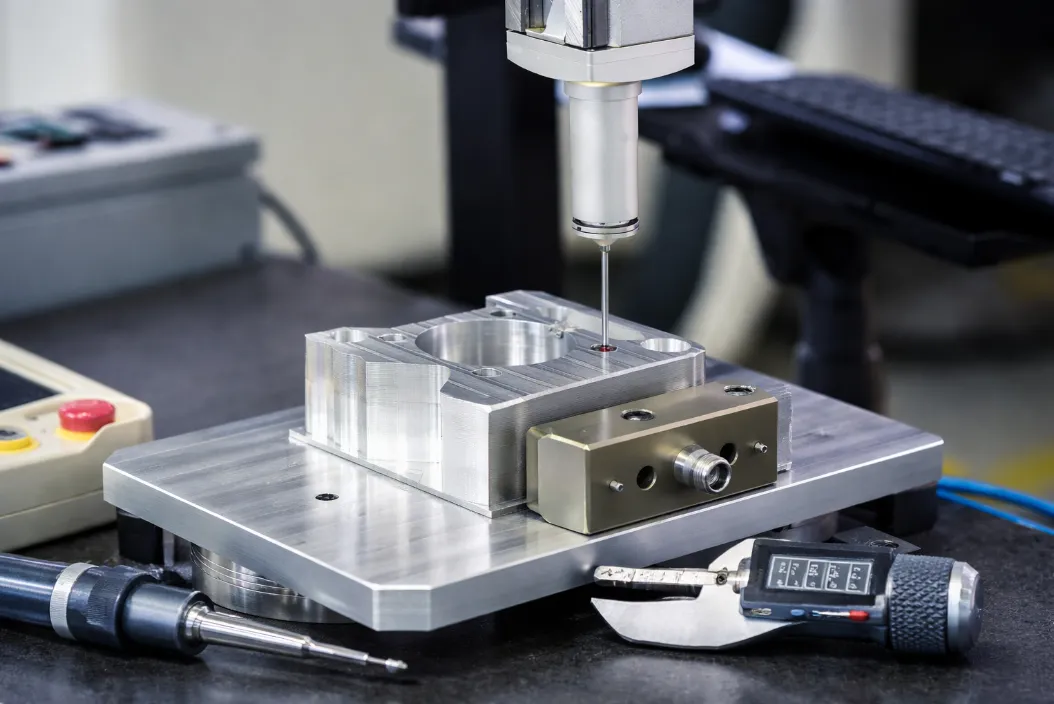
Quick Answer: CNC machining tolerances define the acceptable range of deviation from a part's specified dimensions. They directly control fit, function, and cost - tighter tolerances mean higher precision but longer machining time and greater expense.
A part that's off by 0.005 inches might work perfectly in a furniture bracket. That same deviation in an aerospace fuel component could cause catastrophic failure. That's the reality of machining tolerances - they're not just numbers on a drawing. They're decisions that determine whether your part works, fits, and survives in the field.
If you've ever received a quote that came back far higher than expected, or received parts that didn't assemble correctly, tolerance specification is often the culprit. This guide breaks down exactly what CNC machining tolerances are, how they work, and how to specify them intelligently for your application.
What Are CNC Machining Tolerances?
A machining tolerance is the permissible limit of variation in a part's physical dimension. It defines how far the actual manufactured dimension can deviate from the nominal (target) dimension while still being considered acceptable.
For example, if a shaft is specified at 25.00 mm ± 0.05 mm, the acceptable range is 24.95 mm to 25.05 mm. Any part measuring within that range passes inspection. Anything outside it is rejected.
Tolerances are expressed in several ways:
Bilateral tolerance: Variation allowed in both directions (e.g., 25.00 ± 0.05 mm)
Unilateral tolerance: Variation allowed in only one direction (e.g., 25.00 +0.00 / −0.10 mm)
Limit dimensioning: Upper and lower limits stated directly (e.g., 24.95–25.05 mm)
Every dimension on a technical drawing carries a tolerance - either explicitly stated or governed by a general tolerance block. Understanding which applies where is one of the most important skills in design for manufacturability.

Standard vs. Tight Tolerances: What's the Difference?
Not all dimensions need the same level of precision. Machine shops work across a broad spectrum of tolerance grades depending on the application.
Standard tolerances for CNC machining typically fall in the range of ±0.005 inches (±0.127 mm) for most metals. These are achievable with common tooling and setups, require minimal additional inspection time, and keep your costs manageable.
Tight tolerances - often ±0.001 inches (±0.025 mm) or tighter - are used where parts must mate precisely, move within bearings, or perform under critical load conditions. Achieving them requires slower cutting speeds, high-precision tooling, temperature-controlled environments, and more rigorous quality inspection.
According to the American Society of Mechanical Engineers (ASME), the Y14.5 standard governs Geometric Dimensioning and Tolerancing (GD&T) in the U.S. GD&T goes beyond simple linear tolerances to control form, orientation, location, and runout - critical in assemblies where multiple parts must align perfectly.
For industries like aerospace and oil & gas, tight tolerances aren't optional - they're mandatory, often governed by industry-specific standards like AS9100 or API specifications.
Why Tolerances Directly Affect Your Project Cost
Here's something many buyers don't realize: tighter tolerances increase cost exponentially, not linearly. Going from ±0.005" to ±0.001" doesn't make your part 5x more expensive - it can make it 10x more expensive, depending on the geometry and material.
Why? Several factors compound:
Slower feeds and speeds are required to achieve fine surface finishes and dimensional accuracy.
More passes may be needed to creep up on a critical dimension.
Tool wear becomes a critical variable - worn tools are retired sooner.
Inspection time increases significantly, often requiring CMM (Coordinate Measuring Machine) verification.
Reject rates go up when working at the edge of a machine's capability, driving up the real per-part cost.
Material hardness also plays a major role. Holding ±0.001" on titanium or carbide requires far more process control than the same tolerance on aluminum - different tooling, slower speeds, and stricter in-process checks throughout.
The practical takeaway: only specify tight tolerances where they're functionally necessary. An over-toleranced part is an unnecessarily expensive part.
How to Choose the Right Tolerance for Your Application
Choosing tolerances isn't guesswork - it's a functional decision. Here's a straightforward framework:
Identify the functional requirement first.
Ask: what happens if this dimension varies by 0.010"? If nothing changes functionally, a standard tolerance is fine. If the part won't assemble or will fail under load, tighten it.Match tolerance to the fit type.
Mechanical fits - clearance, transition, and interference - each require different tolerance grades. An interference fit (press fit) demands very tight bilateral tolerances on both the shaft and bore to guarantee the correct amount of material overlap.Consider the material.
Soft materials like aluminum machine easily to tight tolerances. Harder or more brittle materials - ceramics, graphite, hardened steels - demand specialized tooling and process adjustments just to hold dimensions that aluminum would hit routinely.Think about inspection.
A tolerance you can't reliably measure is a tolerance you can't control. Sub-0.001" tolerances may require CMM inspection or optical measurement - factor that into your timeline and budget.Communicate with your machine shop early.
Design engineers who loop in their machining partner during the design phase - not after drawings are finalized - consistently get better results. An experienced shop can flag problematic tolerances before any chips are cut, often saving significant rework cost later. You can learn more about what that looks like in practice on the precision machining capabilities page.
Tolerances Across Common CNC Processes
Different CNC processes have different natural tolerance capabilities. Knowing this helps you choose the right process for your required precision level.
Process | Typical Achievable Tolerance |
CNC Milling | ±0.005" to ±0.001" |
CNC Turning | ±0.005" to ±0.0005" |
Surface Grinding | ±0.0002" to ±0.0001" |
EDM (Wire) | ±0.0005" or better |
The table above reflects what's achievable under normal production conditions. Milling and turning cover the majority of tolerance requirements you'll encounter, while grinding and EDM step in when sub-thousandth precision is non-negotiable.
For shaft components specifically, concentricity and cylindricity are just as important as linear dimensions - a shaft that's the right diameter but slightly bent or eccentric will still cause bearing failures.
Common Tolerance Mistakes That Cost You Time and Money
Even experienced engineers make these tolerance specification errors:
Applying tight tolerances globally via a blanket general tolerance block when only two or three dimensions are actually critical.
Ignoring GD&T and relying only on ±linear tolerances, which don't adequately control form or position.
Not accounting for thermal expansion - a 25mm aluminum part that's perfect at 20°C will measure differently at 50°C. For high-precision applications in hot environments, material thermal properties matter.
Specifying tolerances tighter than the measuring equipment can verify - if your supplier's CMM has a measurement uncertainty of ±0.0003", a ±0.0002" tolerance is effectively unverifiable.
If you're unsure whether your tolerance stack-up is actually manufacturable, it's worth getting a shop review before finalizing drawings. That's something ER Machining does as part of its reverse engineering work and custom part projects - often catching issues that would have led to expensive rework down the line.
The Bottom Line
Machining tolerances are one of the most impactful - and most frequently misunderstood - aspects of CNC part design. Get them right and you'll have parts that fit, function, and arrive on time at a fair price. Over-specify them and you'll pay a steep premium for precision you don't need.
The right approach is always functional: tolerance to the requirement, communicate early with your shop, and choose a machining partner with genuine process capability and inspection infrastructure. If you're working on a project that requires tight tolerances or complex geometries, contact ER Machining to discuss your specifications before finalizing your drawings.
Frequently Asked Questions
Q: What is a standard tolerance in CNC machining?
A: Standard CNC machining tolerances are typically ±0.005 inches (±0.127 mm) for most metals. This is achievable with conventional tooling and represents a good balance between precision and cost for non-critical dimensions.
Q: What's the tightest tolerance CNC machining can achieve?
A: High-precision CNC machines, particularly grinding and wire EDM, can achieve tolerances of ±0.0001 inches (±0.0025 mm) under controlled conditions. Most standard milling and turning operations reliably hold ±0.001" to ±0.002".
Q: Do tighter tolerances always mean better quality?
A: Not necessarily. A tight tolerance on a non-critical dimension adds cost without improving function. Quality means the part performs its intended function reliably - that's best achieved by specifying appropriate tolerances, not uniformly tight ones.
Q: How does material choice affect achievable tolerances?
A: Softer materials like aluminum machine to tight tolerances more easily than hard materials like stainless steel, titanium, or carbide. Brittle materials like ceramics and graphite require specialized processes to maintain dimensional control.
Q: What is GD&T and do I need it?
A: GD&T (Geometric Dimensioning and Tolerancing) is a standardized language for specifying part geometry that goes beyond simple ±linear tolerances. It controls form, orientation, location, and runout. If your part has features that must align precisely with other features in an assembly, GD&T is typically the right approach.
Q: What happens if a part is out of tolerance?
A: Out-of-tolerance parts are either rejected, reworked, or - in some cases - dispositioned for use if the deviation is minor and functionally acceptable. Systematic out-of-tolerance production signals a process that needs correction.
Published by the ER Machining team. ER Machining is a precision CNC machine shop serving aerospace, oil & gas, and industrial clients with milling, turning, and specialty material machining services.
Quick Answer: CNC machining tolerances define the acceptable range of deviation from a part's specified dimensions. They directly control fit, function, and cost - tighter tolerances mean higher precision but longer machining time and greater expense.
A part that's off by 0.005 inches might work perfectly in a furniture bracket. That same deviation in an aerospace fuel component could cause catastrophic failure. That's the reality of machining tolerances - they're not just numbers on a drawing. They're decisions that determine whether your part works, fits, and survives in the field.
If you've ever received a quote that came back far higher than expected, or received parts that didn't assemble correctly, tolerance specification is often the culprit. This guide breaks down exactly what CNC machining tolerances are, how they work, and how to specify them intelligently for your application.
What Are CNC Machining Tolerances?
A machining tolerance is the permissible limit of variation in a part's physical dimension. It defines how far the actual manufactured dimension can deviate from the nominal (target) dimension while still being considered acceptable.
For example, if a shaft is specified at 25.00 mm ± 0.05 mm, the acceptable range is 24.95 mm to 25.05 mm. Any part measuring within that range passes inspection. Anything outside it is rejected.
Tolerances are expressed in several ways:
Bilateral tolerance: Variation allowed in both directions (e.g., 25.00 ± 0.05 mm)
Unilateral tolerance: Variation allowed in only one direction (e.g., 25.00 +0.00 / −0.10 mm)
Limit dimensioning: Upper and lower limits stated directly (e.g., 24.95–25.05 mm)
Every dimension on a technical drawing carries a tolerance - either explicitly stated or governed by a general tolerance block. Understanding which applies where is one of the most important skills in design for manufacturability.
Standard vs. Tight Tolerances: What's the Difference?
Not all dimensions need the same level of precision. Machine shops work across a broad spectrum of tolerance grades depending on the application.
Standard tolerances for CNC machining typically fall in the range of ±0.005 inches (±0.127 mm) for most metals. These are achievable with common tooling and setups, require minimal additional inspection time, and keep your costs manageable.
Tight tolerances - often ±0.001 inches (±0.025 mm) or tighter - are used where parts must mate precisely, move within bearings, or perform under critical load conditions. Achieving them requires slower cutting speeds, high-precision tooling, temperature-controlled environments, and more rigorous quality inspection.
According to the American Society of Mechanical Engineers (ASME), the Y14.5 standard governs Geometric Dimensioning and Tolerancing (GD&T) in the U.S. GD&T goes beyond simple linear tolerances to control form, orientation, location, and runout - critical in assemblies where multiple parts must align perfectly.
For industries like aerospace and oil & gas, tight tolerances aren't optional - they're mandatory, often governed by industry-specific standards like AS9100 or API specifications.
Why Tolerances Directly Affect Your Project Cost
Here's something many buyers don't realize: tighter tolerances increase cost exponentially, not linearly. Going from ±0.005" to ±0.001" doesn't make your part 5x more expensive - it can make it 10x more expensive, depending on the geometry and material.
Why? Several factors compound:
Slower feeds and speeds are required to achieve fine surface finishes and dimensional accuracy.
More passes may be needed to creep up on a critical dimension.
Tool wear becomes a critical variable - worn tools are retired sooner.
Inspection time increases significantly, often requiring CMM (Coordinate Measuring Machine) verification.
Reject rates go up when working at the edge of a machine's capability, driving up the real per-part cost.
Material hardness also plays a major role. Holding ±0.001" on titanium or carbide requires far more process control than the same tolerance on aluminum - different tooling, slower speeds, and stricter in-process checks throughout.
The practical takeaway: only specify tight tolerances where they're functionally necessary. An over-toleranced part is an unnecessarily expensive part.
How to Choose the Right Tolerance for Your Application
Choosing tolerances isn't guesswork - it's a functional decision. Here's a straightforward framework:
Identify the functional requirement first.
Ask: what happens if this dimension varies by 0.010"? If nothing changes functionally, a standard tolerance is fine. If the part won't assemble or will fail under load, tighten it.Match tolerance to the fit type.
Mechanical fits - clearance, transition, and interference - each require different tolerance grades. An interference fit (press fit) demands very tight bilateral tolerances on both the shaft and bore to guarantee the correct amount of material overlap.Consider the material.
Soft materials like aluminum machine easily to tight tolerances. Harder or more brittle materials - ceramics, graphite, hardened steels - demand specialized tooling and process adjustments just to hold dimensions that aluminum would hit routinely.Think about inspection.
A tolerance you can't reliably measure is a tolerance you can't control. Sub-0.001" tolerances may require CMM inspection or optical measurement - factor that into your timeline and budget.Communicate with your machine shop early.
Design engineers who loop in their machining partner during the design phase - not after drawings are finalized - consistently get better results. An experienced shop can flag problematic tolerances before any chips are cut, often saving significant rework cost later. You can learn more about what that looks like in practice on the precision machining capabilities page.
Tolerances Across Common CNC Processes
Different CNC processes have different natural tolerance capabilities. Knowing this helps you choose the right process for your required precision level.
Process | Typical Achievable Tolerance |
CNC Milling | ±0.005" to ±0.001" |
CNC Turning | ±0.005" to ±0.0005" |
Surface Grinding | ±0.0002" to ±0.0001" |
EDM (Wire) | ±0.0005" or better |
The table above reflects what's achievable under normal production conditions. Milling and turning cover the majority of tolerance requirements you'll encounter, while grinding and EDM step in when sub-thousandth precision is non-negotiable.
For shaft components specifically, concentricity and cylindricity are just as important as linear dimensions - a shaft that's the right diameter but slightly bent or eccentric will still cause bearing failures.
Common Tolerance Mistakes That Cost You Time and Money
Even experienced engineers make these tolerance specification errors:
Applying tight tolerances globally via a blanket general tolerance block when only two or three dimensions are actually critical.
Ignoring GD&T and relying only on ±linear tolerances, which don't adequately control form or position.
Not accounting for thermal expansion - a 25mm aluminum part that's perfect at 20°C will measure differently at 50°C. For high-precision applications in hot environments, material thermal properties matter.
Specifying tolerances tighter than the measuring equipment can verify - if your supplier's CMM has a measurement uncertainty of ±0.0003", a ±0.0002" tolerance is effectively unverifiable.
If you're unsure whether your tolerance stack-up is actually manufacturable, it's worth getting a shop review before finalizing drawings. That's something ER Machining does as part of its reverse engineering work and custom part projects - often catching issues that would have led to expensive rework down the line.
The Bottom Line
Machining tolerances are one of the most impactful - and most frequently misunderstood - aspects of CNC part design. Get them right and you'll have parts that fit, function, and arrive on time at a fair price. Over-specify them and you'll pay a steep premium for precision you don't need.
The right approach is always functional: tolerance to the requirement, communicate early with your shop, and choose a machining partner with genuine process capability and inspection infrastructure. If you're working on a project that requires tight tolerances or complex geometries, contact ER Machining to discuss your specifications before finalizing your drawings.
Frequently Asked Questions
Q: What is a standard tolerance in CNC machining?
A: Standard CNC machining tolerances are typically ±0.005 inches (±0.127 mm) for most metals. This is achievable with conventional tooling and represents a good balance between precision and cost for non-critical dimensions.
Q: What's the tightest tolerance CNC machining can achieve?
A: High-precision CNC machines, particularly grinding and wire EDM, can achieve tolerances of ±0.0001 inches (±0.0025 mm) under controlled conditions. Most standard milling and turning operations reliably hold ±0.001" to ±0.002".
Q: Do tighter tolerances always mean better quality?
A: Not necessarily. A tight tolerance on a non-critical dimension adds cost without improving function. Quality means the part performs its intended function reliably - that's best achieved by specifying appropriate tolerances, not uniformly tight ones.
Q: How does material choice affect achievable tolerances?
A: Softer materials like aluminum machine to tight tolerances more easily than hard materials like stainless steel, titanium, or carbide. Brittle materials like ceramics and graphite require specialized processes to maintain dimensional control.
Q: What is GD&T and do I need it?
A: GD&T (Geometric Dimensioning and Tolerancing) is a standardized language for specifying part geometry that goes beyond simple ±linear tolerances. It controls form, orientation, location, and runout. If your part has features that must align precisely with other features in an assembly, GD&T is typically the right approach.
Q: What happens if a part is out of tolerance?
A: Out-of-tolerance parts are either rejected, reworked, or - in some cases - dispositioned for use if the deviation is minor and functionally acceptable. Systematic out-of-tolerance production signals a process that needs correction.
Published by the ER Machining team. ER Machining is a precision CNC machine shop serving aerospace, oil & gas, and industrial clients with milling, turning, and specialty material machining services.
Please follow and like us:

Sort By:

Outsourcing vs. In-House Machining: What Actually Makes Sense for Your Business?

Tungsten Carbide Machining: Expert Tips, Techniques, and Best Practices for Precision Results

Graphite Machining: Processes, Challenges, Applications and Precision Services

Advanced Carbide Ceramics Machining: Why These Materials Rule in Extreme Conditions

Why Aerospace CNC Machining Really Needs a Different kind of Precision
Why Titanium Is Dominant in Aerospace CNC Machining
Related Blog Posts
Jun 27, 2026
Tungsten Carbide Machining: Expert Tips, Techniques, and Best Practices for Precision Results
Explore tungsten carbide machining challenges, best practices, and precision techniques for producing durable, high-performance components.
Jun 27, 2026
Tungsten Carbide Machining: Expert Tips, Techniques, and Best Practices for Precision Results
Explore tungsten carbide machining challenges, best practices, and precision techniques for producing durable, high-performance components.
Jun 27, 2026
Graphite Machining: Processes, Challenges, Applications and Precision Services
Learn graphite machining processes, key challenges, industrial applications, and how precision CNC machining delivers reliable, high-quality parts.
Jun 27, 2026
Graphite Machining: Processes, Challenges, Applications and Precision Services
Learn graphite machining processes, key challenges, industrial applications, and how precision CNC machining delivers reliable, high-quality parts.
Jun 27, 2026
Advanced Carbide Ceramics Machining: Why These Materials Rule in Extreme Conditions
Learn how precision machining of boron carbide, silicon carbide, and titanium carbide delivers exceptional wear resistance, heat tolerance, and accuracy.
Jun 27, 2026
Advanced Carbide Ceramics Machining: Why These Materials Rule in Extreme Conditions
Learn how precision machining of boron carbide, silicon carbide, and titanium carbide delivers exceptional wear resistance, heat tolerance, and accuracy.
Jun 27, 2026
Tungsten Carbide Machining: Expert Tips, Techniques, and Best Practices for Precision Results
Explore tungsten carbide machining challenges, best practices, and precision techniques for producing durable, high-performance components.
Jun 27, 2026
Graphite Machining: Processes, Challenges, Applications and Precision Services
Learn graphite machining processes, key challenges, industrial applications, and how precision CNC machining delivers reliable, high-quality parts.