Table of Content
Title
ER Machining, provides emergency machining services on any request.
Fast turnaround! · Call or email us!
Contact Us!
CNC Machining Prototyping: Balancing Speed and Precision for Optimal Results
CNC Machining
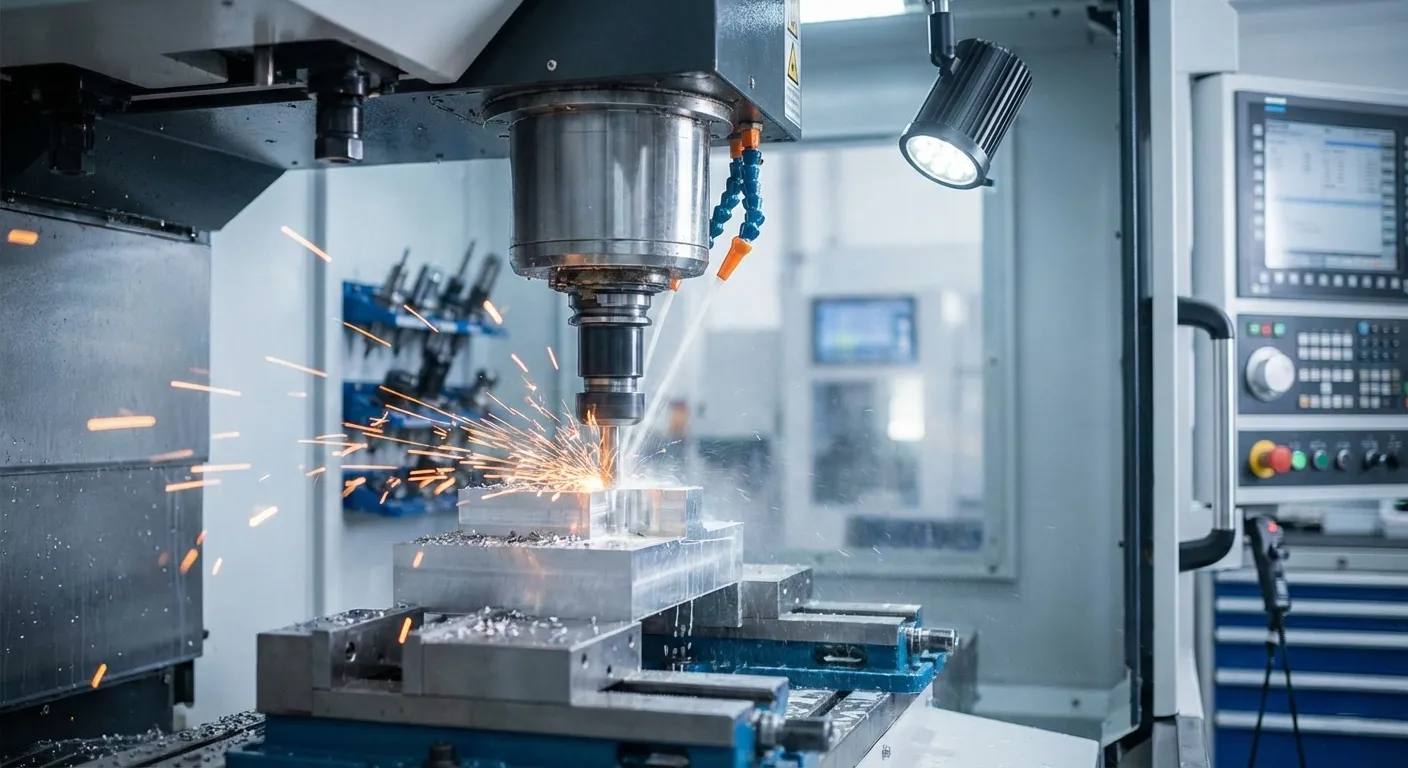
Picture this: you're an engineer facing a tight deadline for a critical aerospace component prototype. You need the part machined within 48 hours, but it also requires tolerances of ±0.0001 inches. This scenario highlights the essential challenge in CNC machining prototyping - the delicate balance between speed and accuracy.
CNC machining prototyping has become the backbone of modern product development, enabling engineers to create functional prototypes that closely mirror final production parts. From aerospace components and automotive parts to medical devices and consumer electronics, CNC prototyping bridges the gap between digital designs and physical reality.
However, there's an inherent tension in this process: the faster you want your prototype, the more you may need to compromise on precision. Understanding this inverse relationship between machining speed and accuracy is crucial for making informed decisions that deliver the best results for your project timeline and quality requirements.
Companies like ER Machining help engineers navigate these complex trade-offs with their precision CNC services and expert guidance, ensuring projects meet both speed and accuracy demands.
Key Takeaways
CNC machining prototyping offers superior precision compared to other rapid prototyping methods
Speed and accuracy exist in an inverse relationship – faster machining typically reduces precision
Cutting parameters, tool paths, and machine capabilities are the primary speed influencers
Environmental conditions and machine calibration critically affect accuracy
Strategic material selection and design considerations can optimize both speed and quality
Understanding CNC Machining for Prototyping
Rapid prototyping with CNC machining involves using computer-controlled cutting tools to create functional prototypes directly from digital models. Unlike traditional manufacturing processes that rely on molds or extensive tooling, CNC prototyping produces parts that closely resemble final products in both form and function.
The primary purpose extends beyond simple visualization – these prototypes enable design validation, functional testing, and iterative development. Research shows that CNC machining enables "quick fabrication of complex parts directly from digital models," making it invaluable for product development cycles.
What sets CNC prototyping apart is its ability to work with production materials, providing realistic performance data that other prototyping methods cannot match. Before exploring the speed-accuracy trade-offs, let's examine what drives speed in CNC operations.

Factors That Drive Speed in CNC Prototyping
Cutting Parameters Optimization
Cutting speed, feed rate, depth of cut, and spindle speed directly impact machining time. Higher cutting speeds and aggressive feed rates can significantly reduce cycle times, with advanced tool paths reducing processing time by 20-30%. However, pushing these parameters too hard may induce vibrations and thermal effects that compromise part quality.
Tool Path Strategies
Efficient tool paths minimize unnecessary movements and reduce cycle times substantially. Adaptive clearing techniques and optimized contouring strategies allow machines to remove material more efficiently. Advanced CAM software analyzes part geometry to generate optimal paths that balance speed with tool life and surface quality.
Machine Capabilities
Multi-axis machines (3, 4, and 5-axis) enable complex operations 60% faster than traditional 3-axis setups. High spindle power, automatic tool changers, and machine rigidity allow higher feed rates without quality loss. These capabilities provide the foundation for high-speed machining operations.
While these factors boost speed significantly, achieving high accuracy demands different considerations that often conflict with speed optimization.
Critical Factors for Achieving High Accuracy
Machine Precision and Calibration
The inherent geometrical accuracy of CNC equipment sets the foundation for precise prototypes. Regular calibration and maintenance ensure machines maintain their specified tolerances over time. Even minor deviations in machine geometry can accumulate into significant dimensional errors in finished parts.
Environmental Controls
Temperature fluctuations, humidity, and vibration effects can dramatically impact accuracy. Material expansion and contraction due to temperature changes can cause dimensional variations. Environmental controls can improve accuracy by up to 50%, making controlled machining environments essential for precision work.
Tool Quality and Machine Rigidity
Structural stiffness minimizes deflections during cutting operations. Tool wear progressively affects dimensional accuracy and surface finish quality. Regular tool inspection and replacement protocols prevent gradual quality degradation that can compromise prototype precision.
Material Properties Influence
Harder materials require slower speeds to maintain accuracy, while thermally unstable materials need precise temperature control. Programming accuracy and advanced software help prevent cumulative errors that can affect final part dimensions.
These accuracy requirements directly conflict with speed optimization efforts, creating the core trade-off challenge.
Speed vs. Accuracy Comparison in CNC Prototyping
Factor | Speed Optimization | Accuracy Priority | Trade-off Impact |
Feed Rate | High (faster completion) | Moderate to Low | Higher feed rates reduce surface quality |
Cutting Speed | Maximum machine capability | Conservative settings | Speed increases cause thermal distortion |
Tool Passes | Single rough pass | Multiple finishing passes | Additional passes triple machining time |
Environmental Control | Standard shop conditions | Climate controlled | Controlled environments add setup time |
Tolerance Achievement | ±0.005" typical | ±0.0001" possible | Tight tolerances require 50% more time |
The Speed vs. Accuracy Trade-off Explained
The basic inverse relationship between speed and accuracy stems from the physics of material removal. Research confirms that "increasing speed via higher feed rates, spindle speeds, or aggressive tool paths often results in degradation of surface finish and dimensional tolerances."
Physical causes include vibrations from high-speed operations, tool deflections under cutting forces, and thermal effects from rapid material removal. Achieving tight tolerances of ±0.0001 inch requires meticulous parameter control and additional inspection steps throughout the process.
Statistical data shows that pursuing high precision can reduce throughput by 40-60% compared to standard tolerance work. Advanced CNC systems with real-time feedback control can mitigate some trade-offs, but the basic relationship remains. Material selection plays a crucial role in managing these competing demands.
Material Selection for Optimal Speed-Accuracy Balance
Easy-to-machine materials like aluminum, brass, and certain plastics allow higher speeds while maintaining reasonable accuracy. These materials machine cleanly with minimal tool wear and thermal effects.
Challenging materials such as titanium, Inconel, and hardened steels require accuracy-focused approaches with conservative cutting parameters. Material stability considerations affect dimensional accuracy, while thermal properties influence achievable machining parameters. Surface finish requirements vary significantly by material type, affecting both speed and accuracy decisions.
Smart design choices can further optimize the speed-accuracy balance in your prototyping projects.
Design Considerations for Prototyping Success
Simplifying complex geometries where possible enables faster machining without sacrificing critical features. Ensuring feature accessibility for machining tools reduces setup time and improves accuracy. Careful attention to wall thickness and structural considerations prevents deflections during machining.
Planning surface finish requirements from the design stage helps optimize machining strategies. Strategic tolerance specification focuses precision efforts where needed most while allowing faster machining for less critical features.
When you need expert guidance on these decisions, partnering with experienced machining shops makes all the difference.
How ER Machining Optimizes Your Prototyping Projects
At ER Machining, our 15+ years of precision machining experience gives us unique insight into optimizing the speed-accuracy balance for each project. Our state-of-the-art 3, 4, and 5-axis CNC equipment capabilities enable us to tackle complex prototyping challenges efficiently.
Our expert team takes a custom approach to analyzing your specific requirements and recommending the optimal speed-accuracy balance. We have extensive material expertise across metals including aluminum, stainless steel, and titanium, as well as engineering plastics.
For urgent projects, our emergency 24/7 services ensure rapid prototyping needs get immediate attention. Our quality assurance processes guarantee on-time delivery while maintaining the precision your prototypes demand.
Best Practices for Managing Trade-offs
Successful prototype projects begin with thorough requirements assessment. Understanding when to prioritize speed versus accuracy depends on the prototype's intended use and testing requirements.
Iterative prototyping strategies can optimize both factors – using faster methods for initial design validation before moving to precision machining for final verification. Clear communication with machining partners about priorities and constraints enables better planning and execution.
Cost considerations often drive decision-making, as precision work requires more time and specialized equipment. Advanced control systems and monitoring can help achieve better results within time constraints.
Conclusion
The inverse relationship between speed and accuracy in CNC machining prototyping is essential to understanding successful project execution. Rather than viewing this as a limitation, smart engineers recognize that strategic balance based on project goals delivers the best outcomes.
Key factors including cutting parameters, environmental controls, material selection, and design optimization all contribute to finding the optimal balance. Advanced control systems continue improving the trade-off equation, but the physics of material removal maintain the basic relationship.
The future of prototyping lies in partnering with experienced CNC machining services that understand these nuances and can guide decision-making effectively. The right balance delivers prototypes that meet both your timeline and quality requirements, enabling successful product development and faster time to market.
Frequently Asked Questions
Q: How much does prioritizing accuracy over speed typically increase prototyping costs?
A: Achieving tight tolerances (±0.0001") typically increases costs by 40-60% due to slower feeds, additional finishing passes, and extended quality control procedures. However, this investment often prevents costly design revisions later in development.
Q: Can 5-axis CNC machines improve both speed and accuracy simultaneously?
A: Yes, 5-axis machines can improve both by accessing complex features in a single setup, reducing repositioning errors and handling times. They enable 60% faster processing of complex geometries while maintaining superior positional accuracy.
Q: Which materials offer the best compromise between fast machining and good accuracy?
A: Aluminum alloys, particularly 6061 and 7075, provide excellent machinability with good dimensional stability. Brass and certain engineering plastics like PEEK also machine quickly while holding reasonable tolerances for most prototyping applications.
Q: How do I determine the right tolerance specifications for my prototype?
A: Focus tight tolerances only on critical functional features like mating surfaces or bearing fits. Use standard tolerances (±0.005") for non-critical dimensions to enable faster machining while controlling costs effectively.
Q: What's the typical turnaround time difference between standard and high-precision prototypes?
A: Standard tolerance prototypes typically complete within 2-3 days, while high-precision parts requiring tight tolerances may need 4-7 days due to additional finishing operations, quality checks, and slower cutting parameters.
Picture this: you're an engineer facing a tight deadline for a critical aerospace component prototype. You need the part machined within 48 hours, but it also requires tolerances of ±0.0001 inches. This scenario highlights the essential challenge in CNC machining prototyping - the delicate balance between speed and accuracy.
CNC machining prototyping has become the backbone of modern product development, enabling engineers to create functional prototypes that closely mirror final production parts. From aerospace components and automotive parts to medical devices and consumer electronics, CNC prototyping bridges the gap between digital designs and physical reality.
However, there's an inherent tension in this process: the faster you want your prototype, the more you may need to compromise on precision. Understanding this inverse relationship between machining speed and accuracy is crucial for making informed decisions that deliver the best results for your project timeline and quality requirements.
Companies like ER Machining help engineers navigate these complex trade-offs with their precision CNC services and expert guidance, ensuring projects meet both speed and accuracy demands.
Key Takeaways
CNC machining prototyping offers superior precision compared to other rapid prototyping methods
Speed and accuracy exist in an inverse relationship – faster machining typically reduces precision
Cutting parameters, tool paths, and machine capabilities are the primary speed influencers
Environmental conditions and machine calibration critically affect accuracy
Strategic material selection and design considerations can optimize both speed and quality
Understanding CNC Machining for Prototyping
Rapid prototyping with CNC machining involves using computer-controlled cutting tools to create functional prototypes directly from digital models. Unlike traditional manufacturing processes that rely on molds or extensive tooling, CNC prototyping produces parts that closely resemble final products in both form and function.
The primary purpose extends beyond simple visualization – these prototypes enable design validation, functional testing, and iterative development. Research shows that CNC machining enables "quick fabrication of complex parts directly from digital models," making it invaluable for product development cycles.
What sets CNC prototyping apart is its ability to work with production materials, providing realistic performance data that other prototyping methods cannot match. Before exploring the speed-accuracy trade-offs, let's examine what drives speed in CNC operations.
Factors That Drive Speed in CNC Prototyping
Cutting Parameters Optimization
Cutting speed, feed rate, depth of cut, and spindle speed directly impact machining time. Higher cutting speeds and aggressive feed rates can significantly reduce cycle times, with advanced tool paths reducing processing time by 20-30%. However, pushing these parameters too hard may induce vibrations and thermal effects that compromise part quality.
Tool Path Strategies
Efficient tool paths minimize unnecessary movements and reduce cycle times substantially. Adaptive clearing techniques and optimized contouring strategies allow machines to remove material more efficiently. Advanced CAM software analyzes part geometry to generate optimal paths that balance speed with tool life and surface quality.
Machine Capabilities
Multi-axis machines (3, 4, and 5-axis) enable complex operations 60% faster than traditional 3-axis setups. High spindle power, automatic tool changers, and machine rigidity allow higher feed rates without quality loss. These capabilities provide the foundation for high-speed machining operations.
While these factors boost speed significantly, achieving high accuracy demands different considerations that often conflict with speed optimization.
Critical Factors for Achieving High Accuracy
Machine Precision and Calibration
The inherent geometrical accuracy of CNC equipment sets the foundation for precise prototypes. Regular calibration and maintenance ensure machines maintain their specified tolerances over time. Even minor deviations in machine geometry can accumulate into significant dimensional errors in finished parts.
Environmental Controls
Temperature fluctuations, humidity, and vibration effects can dramatically impact accuracy. Material expansion and contraction due to temperature changes can cause dimensional variations. Environmental controls can improve accuracy by up to 50%, making controlled machining environments essential for precision work.
Tool Quality and Machine Rigidity
Structural stiffness minimizes deflections during cutting operations. Tool wear progressively affects dimensional accuracy and surface finish quality. Regular tool inspection and replacement protocols prevent gradual quality degradation that can compromise prototype precision.
Material Properties Influence
Harder materials require slower speeds to maintain accuracy, while thermally unstable materials need precise temperature control. Programming accuracy and advanced software help prevent cumulative errors that can affect final part dimensions.
These accuracy requirements directly conflict with speed optimization efforts, creating the core trade-off challenge.
Speed vs. Accuracy Comparison in CNC Prototyping
Factor | Speed Optimization | Accuracy Priority | Trade-off Impact |
Feed Rate | High (faster completion) | Moderate to Low | Higher feed rates reduce surface quality |
Cutting Speed | Maximum machine capability | Conservative settings | Speed increases cause thermal distortion |
Tool Passes | Single rough pass | Multiple finishing passes | Additional passes triple machining time |
Environmental Control | Standard shop conditions | Climate controlled | Controlled environments add setup time |
Tolerance Achievement | ±0.005" typical | ±0.0001" possible | Tight tolerances require 50% more time |
The Speed vs. Accuracy Trade-off Explained
The basic inverse relationship between speed and accuracy stems from the physics of material removal. Research confirms that "increasing speed via higher feed rates, spindle speeds, or aggressive tool paths often results in degradation of surface finish and dimensional tolerances."
Physical causes include vibrations from high-speed operations, tool deflections under cutting forces, and thermal effects from rapid material removal. Achieving tight tolerances of ±0.0001 inch requires meticulous parameter control and additional inspection steps throughout the process.
Statistical data shows that pursuing high precision can reduce throughput by 40-60% compared to standard tolerance work. Advanced CNC systems with real-time feedback control can mitigate some trade-offs, but the basic relationship remains. Material selection plays a crucial role in managing these competing demands.
Material Selection for Optimal Speed-Accuracy Balance
Easy-to-machine materials like aluminum, brass, and certain plastics allow higher speeds while maintaining reasonable accuracy. These materials machine cleanly with minimal tool wear and thermal effects.
Challenging materials such as titanium, Inconel, and hardened steels require accuracy-focused approaches with conservative cutting parameters. Material stability considerations affect dimensional accuracy, while thermal properties influence achievable machining parameters. Surface finish requirements vary significantly by material type, affecting both speed and accuracy decisions.
Smart design choices can further optimize the speed-accuracy balance in your prototyping projects.
Design Considerations for Prototyping Success
Simplifying complex geometries where possible enables faster machining without sacrificing critical features. Ensuring feature accessibility for machining tools reduces setup time and improves accuracy. Careful attention to wall thickness and structural considerations prevents deflections during machining.
Planning surface finish requirements from the design stage helps optimize machining strategies. Strategic tolerance specification focuses precision efforts where needed most while allowing faster machining for less critical features.
When you need expert guidance on these decisions, partnering with experienced machining shops makes all the difference.
How ER Machining Optimizes Your Prototyping Projects
At ER Machining, our 15+ years of precision machining experience gives us unique insight into optimizing the speed-accuracy balance for each project. Our state-of-the-art 3, 4, and 5-axis CNC equipment capabilities enable us to tackle complex prototyping challenges efficiently.
Our expert team takes a custom approach to analyzing your specific requirements and recommending the optimal speed-accuracy balance. We have extensive material expertise across metals including aluminum, stainless steel, and titanium, as well as engineering plastics.
For urgent projects, our emergency 24/7 services ensure rapid prototyping needs get immediate attention. Our quality assurance processes guarantee on-time delivery while maintaining the precision your prototypes demand.
Best Practices for Managing Trade-offs
Successful prototype projects begin with thorough requirements assessment. Understanding when to prioritize speed versus accuracy depends on the prototype's intended use and testing requirements.
Iterative prototyping strategies can optimize both factors – using faster methods for initial design validation before moving to precision machining for final verification. Clear communication with machining partners about priorities and constraints enables better planning and execution.
Cost considerations often drive decision-making, as precision work requires more time and specialized equipment. Advanced control systems and monitoring can help achieve better results within time constraints.
Conclusion
The inverse relationship between speed and accuracy in CNC machining prototyping is essential to understanding successful project execution. Rather than viewing this as a limitation, smart engineers recognize that strategic balance based on project goals delivers the best outcomes.
Key factors including cutting parameters, environmental controls, material selection, and design optimization all contribute to finding the optimal balance. Advanced control systems continue improving the trade-off equation, but the physics of material removal maintain the basic relationship.
The future of prototyping lies in partnering with experienced CNC machining services that understand these nuances and can guide decision-making effectively. The right balance delivers prototypes that meet both your timeline and quality requirements, enabling successful product development and faster time to market.
Frequently Asked Questions
Q: How much does prioritizing accuracy over speed typically increase prototyping costs?
A: Achieving tight tolerances (±0.0001") typically increases costs by 40-60% due to slower feeds, additional finishing passes, and extended quality control procedures. However, this investment often prevents costly design revisions later in development.
Q: Can 5-axis CNC machines improve both speed and accuracy simultaneously?
A: Yes, 5-axis machines can improve both by accessing complex features in a single setup, reducing repositioning errors and handling times. They enable 60% faster processing of complex geometries while maintaining superior positional accuracy.
Q: Which materials offer the best compromise between fast machining and good accuracy?
A: Aluminum alloys, particularly 6061 and 7075, provide excellent machinability with good dimensional stability. Brass and certain engineering plastics like PEEK also machine quickly while holding reasonable tolerances for most prototyping applications.
Q: How do I determine the right tolerance specifications for my prototype?
A: Focus tight tolerances only on critical functional features like mating surfaces or bearing fits. Use standard tolerances (±0.005") for non-critical dimensions to enable faster machining while controlling costs effectively.
Q: What's the typical turnaround time difference between standard and high-precision prototypes?
A: Standard tolerance prototypes typically complete within 2-3 days, while high-precision parts requiring tight tolerances may need 4-7 days due to additional finishing operations, quality checks, and slower cutting parameters.
Please follow and like us:

Sort By:

Outsourcing vs. In-House Machining: What Actually Makes Sense for Your Business?

Tungsten Carbide Machining: Expert Tips, Techniques, and Best Practices for Precision Results

Graphite Machining: Processes, Challenges, Applications and Precision Services

Advanced Carbide Ceramics Machining: Why These Materials Rule in Extreme Conditions

Why Aerospace CNC Machining Really Needs a Different kind of Precision
Why Titanium Is Dominant in Aerospace CNC Machining
Related Blog Posts
Jun 27, 2026
Tungsten Carbide Machining: Expert Tips, Techniques, and Best Practices for Precision Results
Explore tungsten carbide machining challenges, best practices, and precision techniques for producing durable, high-performance components.
Jun 27, 2026
Tungsten Carbide Machining: Expert Tips, Techniques, and Best Practices for Precision Results
Explore tungsten carbide machining challenges, best practices, and precision techniques for producing durable, high-performance components.
Jun 27, 2026
Graphite Machining: Processes, Challenges, Applications and Precision Services
Learn graphite machining processes, key challenges, industrial applications, and how precision CNC machining delivers reliable, high-quality parts.
Jun 27, 2026
Graphite Machining: Processes, Challenges, Applications and Precision Services
Learn graphite machining processes, key challenges, industrial applications, and how precision CNC machining delivers reliable, high-quality parts.
Jun 27, 2026
Advanced Carbide Ceramics Machining: Why These Materials Rule in Extreme Conditions
Learn how precision machining of boron carbide, silicon carbide, and titanium carbide delivers exceptional wear resistance, heat tolerance, and accuracy.
Jun 27, 2026
Advanced Carbide Ceramics Machining: Why These Materials Rule in Extreme Conditions
Learn how precision machining of boron carbide, silicon carbide, and titanium carbide delivers exceptional wear resistance, heat tolerance, and accuracy.
Jun 27, 2026
Tungsten Carbide Machining: Expert Tips, Techniques, and Best Practices for Precision Results
Explore tungsten carbide machining challenges, best practices, and precision techniques for producing durable, high-performance components.
Jun 27, 2026
Graphite Machining: Processes, Challenges, Applications and Precision Services
Learn graphite machining processes, key challenges, industrial applications, and how precision CNC machining delivers reliable, high-quality parts.