Table of Content
Title
ER Machining, provides emergency machining services on any request.
Fast turnaround! · Call or email us!
Contact Us!
Custom Machining vs Standard Machining: Which Is Right for Your Project?
CNC Machining
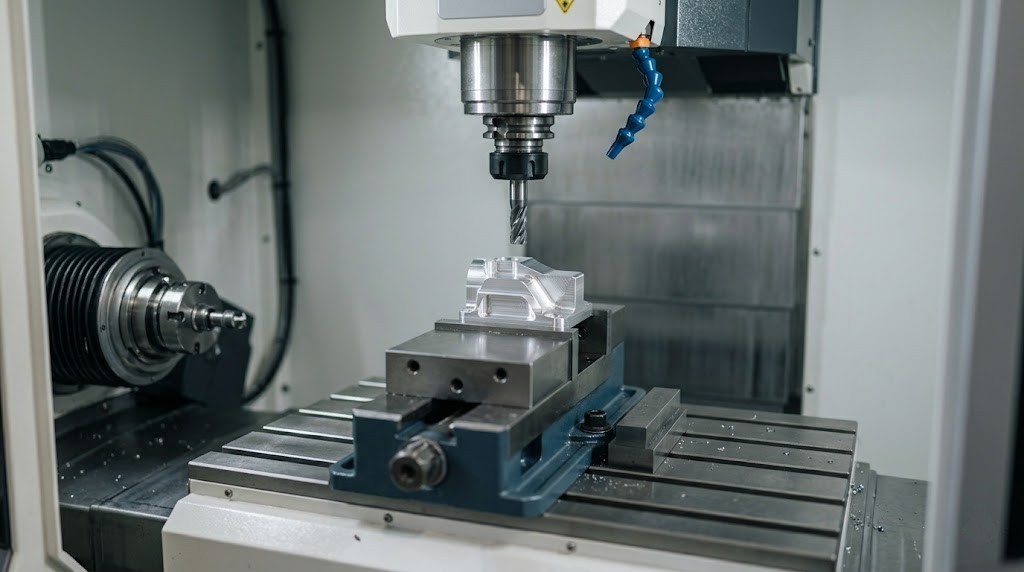
Quick Answer: Custom machining creates unique, complex parts tailored to specific requirements through flexible processes, while standard machining produces high-volume identical parts through preset specifications. Choose custom machining for prototypes, small runs, and intricate designs; choose standard machining for cost-effective mass production of uniform components.
The Core Difference: Flexibility vs. Efficiency
Here's the thing most people miss: the choice between custom machining and standard machining isn't about which is "better." It's about which solves your actual problem.
Standard machining excels at one thing: running the same part over and over. Once the setup is done, once the CNC machine is programmed, costs plummet and speed accelerates. You're paying for setup once and spreading it across thousands of units. That's why industries like automotive and aerospace rely on it for high-volume components.
Custom machining takes the opposite approach. It embraces variation. Each project gets its own setup, its own programming, sometimes its own tooling strategy. That flexibility means you can make something nobody's made before - or something that exists but needs tweaking for your specific use case.
The trade-off is straightforward: custom work costs more per unit upfront. But if you need one prototype, ten parts, or a complex geometry that standard processes can't handle, custom machining often becomes the only practical option.
When Standard Machining Makes Economic Sense
Standard machining, also called conventional or production machining, was built for volume. Think of automotive suppliers cranking out the same engine block repeatedly, or electronics manufacturers producing millions of identical fasteners.
Volume is the magic word here. When you need 100,000 identical components, your setup costs (tooling, CNC programming, fixture creation) get divided across 100,000 units. That amortization makes unit costs incredibly low - often the cheapest way to manufacture anything.
The efficiency compounds. Modern CNC machines run without supervision once programmed. They maintain tight tolerances automatically. Quality control becomes statistical rather than individual. This approach powered the industrial era and still dominates whenever mass production enters the equation.
But here's where it breaks down: deviation costs money. Change the design slightly? Retooling. Need a different material? Reset the process. Want to experiment with a new dimension? That's a new setup. Standard machining punishes customization, which is why it works best for products that ship unchanged year after year.
Industries that rely on this approach - automotive suppliers, consumer electronics manufacturers, aerospace tier-one vendors - commit to designs early and run them hard.
Custom Machining: When You Need Flexibility
Custom machining exists because real problems don't always fit standardized solutions.
Medical device manufacturers constantly face this reality. A spinal implant might need biocompatible titanium, complex internal geometries, surface finishes to specific micrometer tolerances, and production runs of perhaps 500 units yearly. Standard machining would struggle here. Custom machine shops exist for exactly this scenario.
Aerospace is another realm where custom shines. Jet engines have thousands of components, many produced in limited quantities, many requiring exotic materials and tight tolerances that demand skilled oversight. The same goes for defense contractors making specialized equipment, or industrial equipment manufacturers building one-off systems for unique customer needs.
Even in less exotic industries, custom machining solves real problems. Startups prototyping new products can't justify million-dollar tooling for a design that might change. Companies retrofitting equipment often need replacement parts that no longer exist. Researchers need specialized hardware for experiments.
And then there's rapid iteration. When you're testing different designs, custom shops give you speed and flexibility that standard processes can't match. You can produce parts in days, test them, modify, and produce the next version - all without the overhead of traditional production setups.
The cost calculation changes entirely. You're not amortizing setup across millions of units. You're paying the full cost of that setup for your quantity. But if that quantity is small or the design is complex, you often have no alternative.

The Real Difference: Complexity and Precision
Standard machining excels at moderate complexity and consistent tolerances. Take that automotive engine block - it's complex, but it's the same block every time. The process is optimized for that exact geometry.
Custom machining often handles higher complexity: internal passageways in medical implants, intricate cooling channels in specialized equipment, asymmetrical designs, or parts with features that demand different tolerances in different areas.
This isn't just about capability - it's about attention. A custom machine shop's engineers examine your part specifically. They might suggest a better approach, flag manufacturability issues, or optimize for your actual production volume. Standard processes follow the script; custom shops adapt to reality.
Precision capability varies, but custom shops often maintain tolerances that would be prohibitively expensive in mass production. When you need ±0.001 inch tolerances across a complex part, custom machining is usually the answer.
Making the Right Choice: A Decision Framework
Volume matters first. If you need 50,000+ identical units, standard machining is almost certainly cheaper and faster. Below 5,000, custom usually makes more sense. The gray zone between requires real cost analysis.
Design complexity is second. Simple geometries? Standard machining can handle them efficiently. Complex internal features, intricate shapes, or designs that demand skilled problem-solving? Custom is worth the cost.
Material and tolerance requirements come next. Standard processes accommodate common materials and typical tolerances well. Exotic materials (titanium, specialized alloys), tight tolerances, or surface finishes that demand precision? Custom shops specialize here.
Timeline shifts the equation. Custom shops can typically turn around prototypes in days or weeks. Standard machining needs time to set up but then screams in terms of per-unit speed. For urgent needs, custom wins. For planned production, standard wins.
One final factor: expertise and oversight. Standard machining is hands-off after setup. Custom machining involves engineers reviewing your part, asking questions, sometimes suggesting improvements. If you value collaborative problem-solving, custom shops deliver it.
The Future of Manufacturing
The line between these approaches is blurring. Modern manufacturing is seeing growth in hybrid approaches - using CNC machines flexibly for custom work during the day, then running standard production overnight. Additive manufacturing is creating new options for small-batch production. Industry 4.0 is making it faster and cheaper to reconfigure standard equipment.
But the fundamental principle remains: choose custom for flexibility and small volumes, choose standard for cost and high volume. Understanding this difference means you'll allocate manufacturing smartly instead of overpaying for unnecessary capacity or choosing a process that can't meet your actual needs.
The best manufacturers don't argue about which approach is superior. They use both, knowing when each delivers genuine value.
Frequently Asked Questions
Q: What's the typical cost difference between custom and standard machining?
A: For single prototypes, custom machining might cost $500–$2,000 per part depending on complexity. Standard machining could cost $5–$50 per part in high volume. The breakeven point depends on setup costs, but typically custom becomes more expensive for quantities under 1,000 units.
Q: How long does custom machining take compared to standard?
A: Custom prototypes might take 2–4 weeks from order to delivery. Standard machining takes longer upfront for setup (weeks), but then runs continuously. For one-off parts, custom is faster. For 10,000+ units, standard is eventually faster due to production speed.
Q: Can standard machining produce complex parts?
A: Yes, but complexity increases costs and setup time. Once production starts, speed is excellent. Custom machining handles unusual complexity more economically because engineers can optimize specifically for your part rather than following a general process.
Q: Which industries use custom machining most?
A: Medical devices, aerospace, defense, research institutions, and industries with frequent product changes. Any sector producing low-volume, high-precision components leverages custom shops.
Q: Is rapid prototyping the same as custom machining?
A: Rapid prototyping is a subset of custom machining that emphasizes speed. It uses flexible processes to turn designs into physical parts quickly for testing before committing to production tooling.
Q: What tolerances can custom machining achieve?
A: Skilled custom shops regularly hold tolerances to ±0.001 inch or tighter. Some specialize in even tighter tolerances when needed. Standard machining typically maintains ±0.005 inch or looser for cost efficiency.
Quick Answer: Custom machining creates unique, complex parts tailored to specific requirements through flexible processes, while standard machining produces high-volume identical parts through preset specifications. Choose custom machining for prototypes, small runs, and intricate designs; choose standard machining for cost-effective mass production of uniform components.
The Core Difference: Flexibility vs. Efficiency
Here's the thing most people miss: the choice between custom machining and standard machining isn't about which is "better." It's about which solves your actual problem.
Standard machining excels at one thing: running the same part over and over. Once the setup is done, once the CNC machine is programmed, costs plummet and speed accelerates. You're paying for setup once and spreading it across thousands of units. That's why industries like automotive and aerospace rely on it for high-volume components.
Custom machining takes the opposite approach. It embraces variation. Each project gets its own setup, its own programming, sometimes its own tooling strategy. That flexibility means you can make something nobody's made before - or something that exists but needs tweaking for your specific use case.
The trade-off is straightforward: custom work costs more per unit upfront. But if you need one prototype, ten parts, or a complex geometry that standard processes can't handle, custom machining often becomes the only practical option.
When Standard Machining Makes Economic Sense
Standard machining, also called conventional or production machining, was built for volume. Think of automotive suppliers cranking out the same engine block repeatedly, or electronics manufacturers producing millions of identical fasteners.
Volume is the magic word here. When you need 100,000 identical components, your setup costs (tooling, CNC programming, fixture creation) get divided across 100,000 units. That amortization makes unit costs incredibly low - often the cheapest way to manufacture anything.
The efficiency compounds. Modern CNC machines run without supervision once programmed. They maintain tight tolerances automatically. Quality control becomes statistical rather than individual. This approach powered the industrial era and still dominates whenever mass production enters the equation.
But here's where it breaks down: deviation costs money. Change the design slightly? Retooling. Need a different material? Reset the process. Want to experiment with a new dimension? That's a new setup. Standard machining punishes customization, which is why it works best for products that ship unchanged year after year.
Industries that rely on this approach - automotive suppliers, consumer electronics manufacturers, aerospace tier-one vendors - commit to designs early and run them hard.
Custom Machining: When You Need Flexibility
Custom machining exists because real problems don't always fit standardized solutions.
Medical device manufacturers constantly face this reality. A spinal implant might need biocompatible titanium, complex internal geometries, surface finishes to specific micrometer tolerances, and production runs of perhaps 500 units yearly. Standard machining would struggle here. Custom machine shops exist for exactly this scenario.
Aerospace is another realm where custom shines. Jet engines have thousands of components, many produced in limited quantities, many requiring exotic materials and tight tolerances that demand skilled oversight. The same goes for defense contractors making specialized equipment, or industrial equipment manufacturers building one-off systems for unique customer needs.
Even in less exotic industries, custom machining solves real problems. Startups prototyping new products can't justify million-dollar tooling for a design that might change. Companies retrofitting equipment often need replacement parts that no longer exist. Researchers need specialized hardware for experiments.
And then there's rapid iteration. When you're testing different designs, custom shops give you speed and flexibility that standard processes can't match. You can produce parts in days, test them, modify, and produce the next version - all without the overhead of traditional production setups.
The cost calculation changes entirely. You're not amortizing setup across millions of units. You're paying the full cost of that setup for your quantity. But if that quantity is small or the design is complex, you often have no alternative.
The Real Difference: Complexity and Precision
Standard machining excels at moderate complexity and consistent tolerances. Take that automotive engine block - it's complex, but it's the same block every time. The process is optimized for that exact geometry.
Custom machining often handles higher complexity: internal passageways in medical implants, intricate cooling channels in specialized equipment, asymmetrical designs, or parts with features that demand different tolerances in different areas.
This isn't just about capability - it's about attention. A custom machine shop's engineers examine your part specifically. They might suggest a better approach, flag manufacturability issues, or optimize for your actual production volume. Standard processes follow the script; custom shops adapt to reality.
Precision capability varies, but custom shops often maintain tolerances that would be prohibitively expensive in mass production. When you need ±0.001 inch tolerances across a complex part, custom machining is usually the answer.
Making the Right Choice: A Decision Framework
Volume matters first. If you need 50,000+ identical units, standard machining is almost certainly cheaper and faster. Below 5,000, custom usually makes more sense. The gray zone between requires real cost analysis.
Design complexity is second. Simple geometries? Standard machining can handle them efficiently. Complex internal features, intricate shapes, or designs that demand skilled problem-solving? Custom is worth the cost.
Material and tolerance requirements come next. Standard processes accommodate common materials and typical tolerances well. Exotic materials (titanium, specialized alloys), tight tolerances, or surface finishes that demand precision? Custom shops specialize here.
Timeline shifts the equation. Custom shops can typically turn around prototypes in days or weeks. Standard machining needs time to set up but then screams in terms of per-unit speed. For urgent needs, custom wins. For planned production, standard wins.
One final factor: expertise and oversight. Standard machining is hands-off after setup. Custom machining involves engineers reviewing your part, asking questions, sometimes suggesting improvements. If you value collaborative problem-solving, custom shops deliver it.
The Future of Manufacturing
The line between these approaches is blurring. Modern manufacturing is seeing growth in hybrid approaches - using CNC machines flexibly for custom work during the day, then running standard production overnight. Additive manufacturing is creating new options for small-batch production. Industry 4.0 is making it faster and cheaper to reconfigure standard equipment.
But the fundamental principle remains: choose custom for flexibility and small volumes, choose standard for cost and high volume. Understanding this difference means you'll allocate manufacturing smartly instead of overpaying for unnecessary capacity or choosing a process that can't meet your actual needs.
The best manufacturers don't argue about which approach is superior. They use both, knowing when each delivers genuine value.
Frequently Asked Questions
Q: What's the typical cost difference between custom and standard machining?
A: For single prototypes, custom machining might cost $500–$2,000 per part depending on complexity. Standard machining could cost $5–$50 per part in high volume. The breakeven point depends on setup costs, but typically custom becomes more expensive for quantities under 1,000 units.
Q: How long does custom machining take compared to standard?
A: Custom prototypes might take 2–4 weeks from order to delivery. Standard machining takes longer upfront for setup (weeks), but then runs continuously. For one-off parts, custom is faster. For 10,000+ units, standard is eventually faster due to production speed.
Q: Can standard machining produce complex parts?
A: Yes, but complexity increases costs and setup time. Once production starts, speed is excellent. Custom machining handles unusual complexity more economically because engineers can optimize specifically for your part rather than following a general process.
Q: Which industries use custom machining most?
A: Medical devices, aerospace, defense, research institutions, and industries with frequent product changes. Any sector producing low-volume, high-precision components leverages custom shops.
Q: Is rapid prototyping the same as custom machining?
A: Rapid prototyping is a subset of custom machining that emphasizes speed. It uses flexible processes to turn designs into physical parts quickly for testing before committing to production tooling.
Q: What tolerances can custom machining achieve?
A: Skilled custom shops regularly hold tolerances to ±0.001 inch or tighter. Some specialize in even tighter tolerances when needed. Standard machining typically maintains ±0.005 inch or looser for cost efficiency.
Please follow and like us:

Sort By:

Outsourcing vs. In-House Machining: What Actually Makes Sense for Your Business?

Tungsten Carbide Machining: Expert Tips, Techniques, and Best Practices for Precision Results

Graphite Machining: Processes, Challenges, Applications and Precision Services

Advanced Carbide Ceramics Machining: Why These Materials Rule in Extreme Conditions

Why Aerospace CNC Machining Really Needs a Different kind of Precision
Why Titanium Is Dominant in Aerospace CNC Machining
Related Blog Posts
Jun 27, 2026
Tungsten Carbide Machining: Expert Tips, Techniques, and Best Practices for Precision Results
Explore tungsten carbide machining challenges, best practices, and precision techniques for producing durable, high-performance components.
Jun 27, 2026
Tungsten Carbide Machining: Expert Tips, Techniques, and Best Practices for Precision Results
Explore tungsten carbide machining challenges, best practices, and precision techniques for producing durable, high-performance components.
Jun 27, 2026
Graphite Machining: Processes, Challenges, Applications and Precision Services
Learn graphite machining processes, key challenges, industrial applications, and how precision CNC machining delivers reliable, high-quality parts.
Jun 27, 2026
Graphite Machining: Processes, Challenges, Applications and Precision Services
Learn graphite machining processes, key challenges, industrial applications, and how precision CNC machining delivers reliable, high-quality parts.
Jun 27, 2026
Advanced Carbide Ceramics Machining: Why These Materials Rule in Extreme Conditions
Learn how precision machining of boron carbide, silicon carbide, and titanium carbide delivers exceptional wear resistance, heat tolerance, and accuracy.
Jun 27, 2026
Advanced Carbide Ceramics Machining: Why These Materials Rule in Extreme Conditions
Learn how precision machining of boron carbide, silicon carbide, and titanium carbide delivers exceptional wear resistance, heat tolerance, and accuracy.
Jun 27, 2026
Tungsten Carbide Machining: Expert Tips, Techniques, and Best Practices for Precision Results
Explore tungsten carbide machining challenges, best practices, and precision techniques for producing durable, high-performance components.
Jun 27, 2026
Graphite Machining: Processes, Challenges, Applications and Precision Services
Learn graphite machining processes, key challenges, industrial applications, and how precision CNC machining delivers reliable, high-quality parts.