Table of Content
Title
ER Machining, provides emergency machining services on any request.
Fast turnaround! · Call or email us!
Contact Us!
Top 10 Advantages of CNC Milling Machine Services
CNC Machining
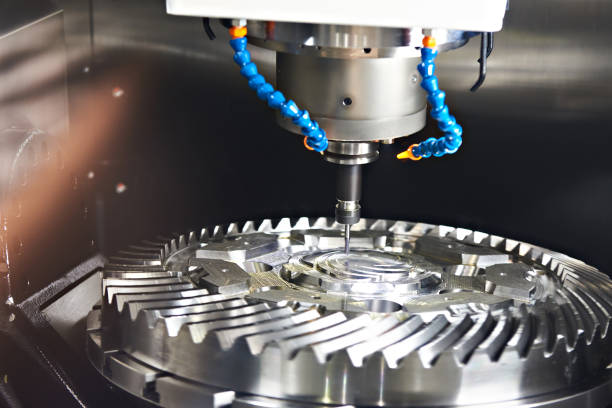
Quick Answer: CNC machine services offer manufacturers unmatched accuracy, repeatable output, and faster production cycles compared to manual machining. Whether you need CNC milling services for complex geometries or CNC turning for cylindrical parts, the core advantages include tighter tolerances, reduced waste, lower labor costs, and the ability to run production around the clock with minimal supervision.
Most people assume CNC machining is just "faster drilling." That undersells it dramatically. CNC machine services have quietly transformed how aerospace, oil and gas, medical device, and automotive companies bring parts from design to delivery. And the advantages go well beyond speed.
Here are the ten advantages worth understanding before your next production run.
Exceptional Dimensional Accuracy
CNC milling machine services operate on programmed instructions derived from CAD/CAM software. Once the G-code is set, the machine executes cuts to within tolerances as tight as ±0.001 inches repeatedly, with no drift between the first part and the five hundredth.
Manual machining depends on the operator's focus and physical consistency. CNC removes that variable entirely. For industries like aerospace or medical devices, where a dimension off by a hair can cause failure, this level of control is not a nice-to-have. It is a requirement.
High Repeatability Across Large Runs
Here's the thing most people miss: accuracy on part one means nothing if part fifty looks different. CNC milling services deliver identical output across the entire production run because the machine follows the same program every single cycle.
This repeatability makes CNC milling machine services the backbone of high-volume manufacturing. ER Machining, for example, runs large-scale production batches where every part must meet exact specifications — not just most of them.
Faster Turnaround Times
Once a CNC program is written and verified, the machine runs with minimal downtime between parts. Setup time drops sharply after the first production run because the same program is simply reloaded. For businesses that operate on tight project timelines or need emergency machining services, this speed advantage is significant.
Compare this to conventional machining, where each operator setup takes time, introduces variation, and cannot easily be reproduced at the same pace.
Ability to Machine Complex Geometries
CNC milling machine services can produce shapes that are simply not achievable through manual methods. Multi-axis CNC milling, where the cutting tool moves across three, four, or five axes simultaneously, allows machinists to create undercuts, curved surfaces, and intricate internal features in a single setup.
CAD/CAM software translates even the most complex 3D designs into precise tool paths. A part that would take days of manual labor to approximate can be machined accurately in a fraction of the time.
Consistent Surface Finish Quality
Surface finish is often treated as a cosmetic concern. It is not. In sealing applications, mating surfaces, and parts subject to friction, surface roughness directly affects performance and lifespan. CNC milling services produce consistent surface finishes because feed rates, spindle speeds, and tool paths are all programmed, not estimated.
This matters especially in precision machining for the oil and gas sector, where components face extreme pressure and wear conditions.
Wide Material Compatibility
Modern CNC milling machine services handle a broad range of materials. Aluminum machining is among the most common, given aluminum's machinability and use in structural components. But the same machines handle stainless steel, titanium machining, brass, copper, engineering plastics like PEEK and Delrin, and exotic alloys.
The material changes; the programming approach adapts. That flexibility makes CNC machine services applicable across industries with very different material requirements.
Reduced Scrap and Material Waste
And this is where it gets interesting. CNC machining does not just save time. It saves material. Because tool paths are optimized before the first cut, there is far less chance of removing too much stock or ruining a part mid-process.
With high-cost materials like titanium, where raw stock is expensive, minimizing scrap is a meaningful financial consideration. CNC milling services reduce that risk systematically rather than relying on operator judgment.
Lower Long-Term Labor Costs
A single CNC milling machine can run largely unsupervised once a job is underway. One operator can often monitor multiple machines simultaneously. In contrast, conventional machining requires constant hands-on attention for every cut.
This does not mean CNC eliminates the need for skilled machinists. It means their expertise is focused where it matters most: programming, setup, quality verification, and problem-solving. Custom machining shops like ER Machining combine advanced machinery with experienced machinists and mechanical engineers, which is where the real capability lives.
Around-the-Clock Production Capability
CNC machines do not fatigue. They do not require shift changes, rest breaks, or performance that varies by time of day. A well-programmed CNC milling machine can run overnight and deliver parts by morning.
For companies that need tight delivery schedules, this continuous production capability changes the math on lead times. It is one reason precision CNC machining shops are able to offer fast turnaround even on complex jobs.
Scalability from Prototype to High-Volume Production
One of the most underappreciated advantages of CNC machine services is how smoothly they scale. A prototype run of five parts uses the same program as a production run of five hundred. The quality does not degrade as volume increases.
This scalability means businesses do not have to choose between prototyping precision and production efficiency. CNC milling services support both, and the transition from prototype to full production requires no retooling from scratch.
Frequently Asked Questions
Q: What are CNC milling services?
A: CNC milling services are a type of precision machining where Computer Numerical Control equipment removes material from a workpiece using rotating cutting tools, guided by pre-programmed G-code derived from CAD/CAM software. They are used to produce complex parts across industries including aerospace, medical, and oil and gas.
Q: How accurate are CNC milling machine services?
A: CNC milling machine services routinely achieve tolerances of ±0.001 inches or tighter, depending on the machine, material, and tooling. This level of precision is consistent across large production runs, which is why CNC machining is preferred over manual methods for critical components.
Q: What materials can be machined with CNC milling services?
A: CNC milling services are compatible with a wide range of materials including aluminum, stainless steel, titanium, brass, copper, and engineering plastics such as PEEK and Delrin. The programming adapts to each material's cutting characteristics.
Q: How do CNC milling services differ from CNC turning services?
A: CNC milling uses rotating cutting tools to remove material from a stationary or moving workpiece, making it ideal for complex shapes and flat surfaces. CNC turning rotates the workpiece against a stationary tool and is best suited for cylindrical or conical parts. Many machining shops offer both to cover the full range of part geometries.
Q: Are CNC milling machine services suitable for both small and large production volumes?
A: Yes. CNC milling machine services scale efficiently from single prototype runs to high-volume production batches. The same program used for prototyping is reloaded for full production, maintaining consistent quality at any volume.
Q: How do I choose the right CNC machining shop for my project?
A: Look for shops with advanced multi-axis CNC equipment, experienced machinists, clear quality verification processes, and the ability to handle your specific material. A shop that offers both CNC milling services and turning services, like ER Machining, gives you flexibility for complex projects that require multiple machining processes.
Quick Answer: CNC machine services offer manufacturers unmatched accuracy, repeatable output, and faster production cycles compared to manual machining. Whether you need CNC milling services for complex geometries or CNC turning for cylindrical parts, the core advantages include tighter tolerances, reduced waste, lower labor costs, and the ability to run production around the clock with minimal supervision.
Most people assume CNC machining is just "faster drilling." That undersells it dramatically. CNC machine services have quietly transformed how aerospace, oil and gas, medical device, and automotive companies bring parts from design to delivery. And the advantages go well beyond speed.
Here are the ten advantages worth understanding before your next production run.
Exceptional Dimensional Accuracy
CNC milling machine services operate on programmed instructions derived from CAD/CAM software. Once the G-code is set, the machine executes cuts to within tolerances as tight as ±0.001 inches repeatedly, with no drift between the first part and the five hundredth.
Manual machining depends on the operator's focus and physical consistency. CNC removes that variable entirely. For industries like aerospace or medical devices, where a dimension off by a hair can cause failure, this level of control is not a nice-to-have. It is a requirement.
High Repeatability Across Large Runs
Here's the thing most people miss: accuracy on part one means nothing if part fifty looks different. CNC milling services deliver identical output across the entire production run because the machine follows the same program every single cycle.
This repeatability makes CNC milling machine services the backbone of high-volume manufacturing. ER Machining, for example, runs large-scale production batches where every part must meet exact specifications — not just most of them.
Faster Turnaround Times
Once a CNC program is written and verified, the machine runs with minimal downtime between parts. Setup time drops sharply after the first production run because the same program is simply reloaded. For businesses that operate on tight project timelines or need emergency machining services, this speed advantage is significant.
Compare this to conventional machining, where each operator setup takes time, introduces variation, and cannot easily be reproduced at the same pace.
Ability to Machine Complex Geometries
CNC milling machine services can produce shapes that are simply not achievable through manual methods. Multi-axis CNC milling, where the cutting tool moves across three, four, or five axes simultaneously, allows machinists to create undercuts, curved surfaces, and intricate internal features in a single setup.
CAD/CAM software translates even the most complex 3D designs into precise tool paths. A part that would take days of manual labor to approximate can be machined accurately in a fraction of the time.
Consistent Surface Finish Quality
Surface finish is often treated as a cosmetic concern. It is not. In sealing applications, mating surfaces, and parts subject to friction, surface roughness directly affects performance and lifespan. CNC milling services produce consistent surface finishes because feed rates, spindle speeds, and tool paths are all programmed, not estimated.
This matters especially in precision machining for the oil and gas sector, where components face extreme pressure and wear conditions.
Wide Material Compatibility
Modern CNC milling machine services handle a broad range of materials. Aluminum machining is among the most common, given aluminum's machinability and use in structural components. But the same machines handle stainless steel, titanium machining, brass, copper, engineering plastics like PEEK and Delrin, and exotic alloys.
The material changes; the programming approach adapts. That flexibility makes CNC machine services applicable across industries with very different material requirements.
Reduced Scrap and Material Waste
And this is where it gets interesting. CNC machining does not just save time. It saves material. Because tool paths are optimized before the first cut, there is far less chance of removing too much stock or ruining a part mid-process.
With high-cost materials like titanium, where raw stock is expensive, minimizing scrap is a meaningful financial consideration. CNC milling services reduce that risk systematically rather than relying on operator judgment.
Lower Long-Term Labor Costs
A single CNC milling machine can run largely unsupervised once a job is underway. One operator can often monitor multiple machines simultaneously. In contrast, conventional machining requires constant hands-on attention for every cut.
This does not mean CNC eliminates the need for skilled machinists. It means their expertise is focused where it matters most: programming, setup, quality verification, and problem-solving. Custom machining shops like ER Machining combine advanced machinery with experienced machinists and mechanical engineers, which is where the real capability lives.
Around-the-Clock Production Capability
CNC machines do not fatigue. They do not require shift changes, rest breaks, or performance that varies by time of day. A well-programmed CNC milling machine can run overnight and deliver parts by morning.
For companies that need tight delivery schedules, this continuous production capability changes the math on lead times. It is one reason precision CNC machining shops are able to offer fast turnaround even on complex jobs.
Scalability from Prototype to High-Volume Production
One of the most underappreciated advantages of CNC machine services is how smoothly they scale. A prototype run of five parts uses the same program as a production run of five hundred. The quality does not degrade as volume increases.
This scalability means businesses do not have to choose between prototyping precision and production efficiency. CNC milling services support both, and the transition from prototype to full production requires no retooling from scratch.
Frequently Asked Questions
Q: What are CNC milling services?
A: CNC milling services are a type of precision machining where Computer Numerical Control equipment removes material from a workpiece using rotating cutting tools, guided by pre-programmed G-code derived from CAD/CAM software. They are used to produce complex parts across industries including aerospace, medical, and oil and gas.
Q: How accurate are CNC milling machine services?
A: CNC milling machine services routinely achieve tolerances of ±0.001 inches or tighter, depending on the machine, material, and tooling. This level of precision is consistent across large production runs, which is why CNC machining is preferred over manual methods for critical components.
Q: What materials can be machined with CNC milling services?
A: CNC milling services are compatible with a wide range of materials including aluminum, stainless steel, titanium, brass, copper, and engineering plastics such as PEEK and Delrin. The programming adapts to each material's cutting characteristics.
Q: How do CNC milling services differ from CNC turning services?
A: CNC milling uses rotating cutting tools to remove material from a stationary or moving workpiece, making it ideal for complex shapes and flat surfaces. CNC turning rotates the workpiece against a stationary tool and is best suited for cylindrical or conical parts. Many machining shops offer both to cover the full range of part geometries.
Q: Are CNC milling machine services suitable for both small and large production volumes?
A: Yes. CNC milling machine services scale efficiently from single prototype runs to high-volume production batches. The same program used for prototyping is reloaded for full production, maintaining consistent quality at any volume.
Q: How do I choose the right CNC machining shop for my project?
A: Look for shops with advanced multi-axis CNC equipment, experienced machinists, clear quality verification processes, and the ability to handle your specific material. A shop that offers both CNC milling services and turning services, like ER Machining, gives you flexibility for complex projects that require multiple machining processes.
Please follow and like us:

Sort By:

Outsourcing vs. In-House Machining: What Actually Makes Sense for Your Business?

Tungsten Carbide Machining: Expert Tips, Techniques, and Best Practices for Precision Results

Graphite Machining: Processes, Challenges, Applications and Precision Services

Advanced Carbide Ceramics Machining: Why These Materials Rule in Extreme Conditions

Why Aerospace CNC Machining Really Needs a Different kind of Precision
Why Titanium Is Dominant in Aerospace CNC Machining
Related Blog Posts
Jun 27, 2026
Tungsten Carbide Machining: Expert Tips, Techniques, and Best Practices for Precision Results
Explore tungsten carbide machining challenges, best practices, and precision techniques for producing durable, high-performance components.
Jun 27, 2026
Tungsten Carbide Machining: Expert Tips, Techniques, and Best Practices for Precision Results
Explore tungsten carbide machining challenges, best practices, and precision techniques for producing durable, high-performance components.
Jun 27, 2026
Graphite Machining: Processes, Challenges, Applications and Precision Services
Learn graphite machining processes, key challenges, industrial applications, and how precision CNC machining delivers reliable, high-quality parts.
Jun 27, 2026
Graphite Machining: Processes, Challenges, Applications and Precision Services
Learn graphite machining processes, key challenges, industrial applications, and how precision CNC machining delivers reliable, high-quality parts.
Jun 27, 2026
Advanced Carbide Ceramics Machining: Why These Materials Rule in Extreme Conditions
Learn how precision machining of boron carbide, silicon carbide, and titanium carbide delivers exceptional wear resistance, heat tolerance, and accuracy.
Jun 27, 2026
Advanced Carbide Ceramics Machining: Why These Materials Rule in Extreme Conditions
Learn how precision machining of boron carbide, silicon carbide, and titanium carbide delivers exceptional wear resistance, heat tolerance, and accuracy.
Jun 27, 2026
Tungsten Carbide Machining: Expert Tips, Techniques, and Best Practices for Precision Results
Explore tungsten carbide machining challenges, best practices, and precision techniques for producing durable, high-performance components.
Jun 27, 2026
Graphite Machining: Processes, Challenges, Applications and Precision Services
Learn graphite machining processes, key challenges, industrial applications, and how precision CNC machining delivers reliable, high-quality parts.