Table of Content
Title
ER Machining, provides emergency machining services on any request.
Fast turnaround! · Call or email us!
Contact Us!
5 Metals Commonly Used in Shaft Manufacturing
CNC Machining
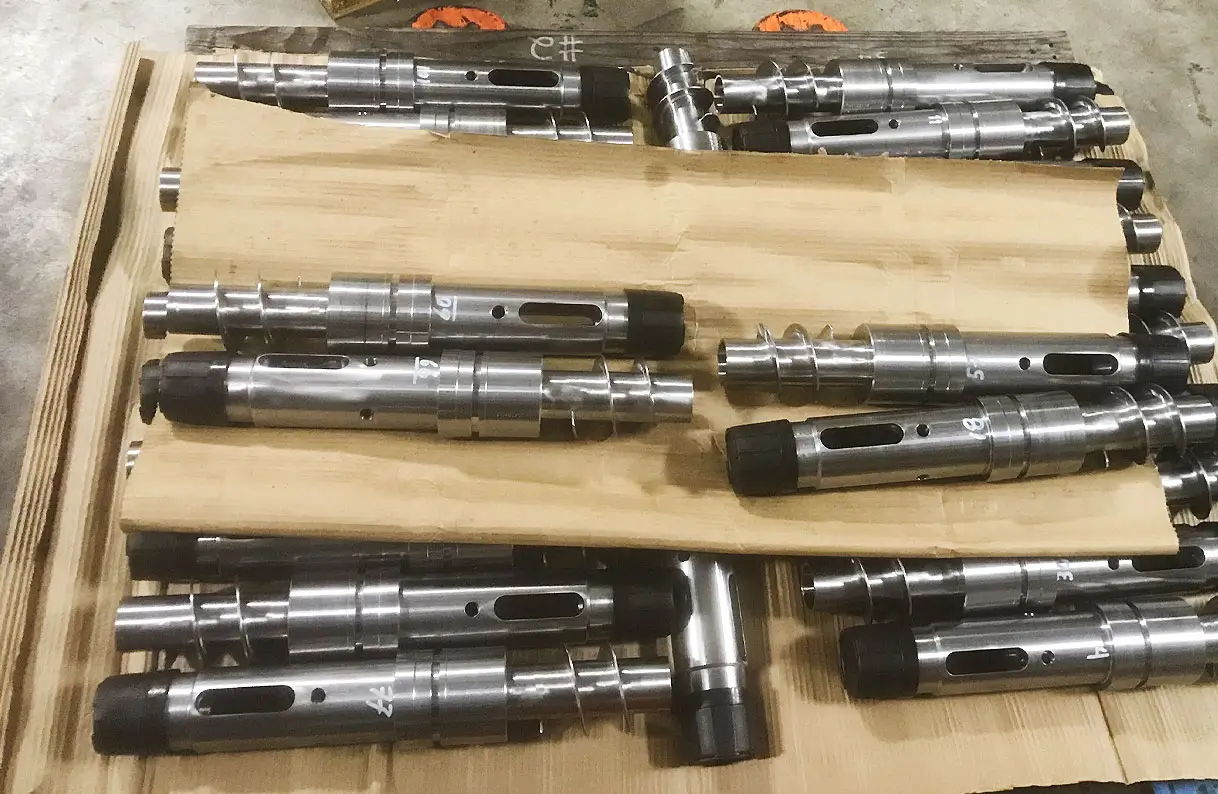
Shafts don't get much attention - they're buried inside machines, doing their job quietly. But get the material wrong and the whole assembly fails. A shaft in an aerospace application and a shaft in a food processing line have almost nothing in common beyond their shape. The metal has to match the job.
Here's a look at the five metals that come up most often in shaft manufacturing, and why each one gets chosen.
1. Steel
Steel is the default for a reason. It's strong, it machines predictably, and it holds up under repeated stress without surprise failures. For most industrial shafts, carbon steel is the starting point - it's affordable and gets the job done in general-purpose setups where you don't need anything exotic.
When the loads get heavier or the environment gets more aggressive, alloy steel takes over. Adding chromium, nickel, or molybdenum changes the mechanical profile considerably. Automotive axles, gearboxes, high-torque drive shafts - these almost always use alloy steel because it handles stress without becoming brittle. It's a well-understood material with decades of machining data behind it, which matters when you're holding tight tolerances.
If you want to understand how steel and other metals behave during the actual machining process, our CNC turning services break down the process and what to expect in terms of precision and surface finish.
2. Stainless Steel
Stainless steel gets specified when the environment is the problem. Marine applications, food processing equipment, pharmaceutical manufacturing - places where moisture, chemicals, or hygiene requirements make regular steel impractical.
The corrosion resistance comes from the chromium content, which forms a thin oxide layer that protects the base metal. 304 and 316 are the grades that show up most in shaft work. 316 in particular handles chloride exposure better, which is why it's common in saltwater or chemical processing environments. The tradeoff is that stainless steel can be harder to machine than plain carbon steel - it work-hardens quickly if you're not careful with feeds and speeds.
3. Aluminum
Aluminum is the obvious call when weight is a constraint. Aerospace engineers have been leaning on it for decades because shaving grams off rotating components adds up fast when you're calculating fuel efficiency across thousands of flight hours.
The alloys most commonly machined into shafts are 6061 and 7075. 6061 offers a good balance of strength and machinability. 7075 is considerably stronger but a bit more difficult to work with. The limitation is clear though: aluminum doesn't belong in high-load or high-temperature applications. It loses strength as temperature climbs, and it won't survive the kind of cyclic loading that steel handles without complaint. Use it where its advantages matter - don't ask it to do what it can't.
4. Titanium
Titanium is in a category by itself when it comes to strength-to-weight ratio. It's lighter than steel but comparable in strength, and it doesn't corrode. That combination makes it genuinely useful in aerospace and medical devices, where both weight and biocompatibility matter.
Ti-6Al-4V is the alloy that does most of the work here. It's what gets specified for demanding shaft applications in jet engines, surgical implants, and marine hardware. The catch is cost and machinability - titanium is expensive to buy and tricky to machine. It generates heat aggressively and can damage tooling if parameters are off. You need the right experience and equipment to get it right.
ER Machining handles titanium work routinely - here's how we approach it.
5. Brass and Bronze
Brass and bronze don't come up as often, but they solve specific problems well. Neither is appropriate for high-load structural shafts, but they're excellent choices in applications where wear resistance, low friction, or corrosion resistance in wet environments matters more than raw strength.
Brass is an alloy of copper and zinc. It machines cleanly, conducts electricity, and looks good - which is why it shows up in decorative hardware, musical instruments, and electrical components. Bronze adds tin to the mix (sometimes other elements) and performs particularly well where metal-on-metal contact is constant. Bearings and marine shafts are the classic use cases. Bronze can essentially lubricate itself over time as it wears slightly, which is a useful property in hard-to-service applications.

Choosing the Right Metal
Steel handles most industrial shaft applications without complaint. It's strong, relatively cheap, and there's a full century of engineering knowledge behind its use. But the right choice for any given shaft depends on what the shaft actually has to survive.
If weight matters, aluminum or titanium enters the picture. If corrosion is the primary concern, you're probably looking at stainless steel or bronze. If the application is specialized - aerospace, medical, marine - material selection becomes a technical decision that's worth getting right early in the design process.
For more on how material choice affects tolerances and surface finish, take a look at our precision machining services. And if you're working across multiple components - shafts, housings, brackets - our CNC machining services cover the full scope of what we handle.
Frequently Asked Questions
1. What's the most common metal used in industrial shafts?
Steel - specifically carbon steel or alloy steel, depending on the load and environment. It's the default because it balances strength, durability, and cost better than most alternatives.
2. When should I choose titanium over steel for a shaft?
When weight reduction is non-negotiable and cost isn't the primary constraint. Aerospace and medical applications justify the expense. For standard industrial work, steel usually makes more sense.
3. Can aluminum shafts handle high-temperature environments?
No. Aluminum loses strength as temperature increases. For high-heat applications, steel or titanium is the right call.
4. Is stainless steel harder to machine than regular steel?
Yes, it work-hardens faster, which means tooling wears more quickly if feeds and speeds aren't managed carefully. It's not difficult to machine well, but it requires the right setup. Our CNC turning services cover how we handle different materials through the turning process.
5. What's the difference between brass and bronze for shaft applications?
Brass is better where electrical conductivity or appearance matters. Bronze performs better in high-wear, low-friction applications like bearings and marine hardware - it has better self-lubricating properties over time.
Shafts don't get much attention - they're buried inside machines, doing their job quietly. But get the material wrong and the whole assembly fails. A shaft in an aerospace application and a shaft in a food processing line have almost nothing in common beyond their shape. The metal has to match the job.
Here's a look at the five metals that come up most often in shaft manufacturing, and why each one gets chosen.
1. Steel
Steel is the default for a reason. It's strong, it machines predictably, and it holds up under repeated stress without surprise failures. For most industrial shafts, carbon steel is the starting point - it's affordable and gets the job done in general-purpose setups where you don't need anything exotic.
When the loads get heavier or the environment gets more aggressive, alloy steel takes over. Adding chromium, nickel, or molybdenum changes the mechanical profile considerably. Automotive axles, gearboxes, high-torque drive shafts - these almost always use alloy steel because it handles stress without becoming brittle. It's a well-understood material with decades of machining data behind it, which matters when you're holding tight tolerances.
If you want to understand how steel and other metals behave during the actual machining process, our CNC turning services break down the process and what to expect in terms of precision and surface finish.
2. Stainless Steel
Stainless steel gets specified when the environment is the problem. Marine applications, food processing equipment, pharmaceutical manufacturing - places where moisture, chemicals, or hygiene requirements make regular steel impractical.
The corrosion resistance comes from the chromium content, which forms a thin oxide layer that protects the base metal. 304 and 316 are the grades that show up most in shaft work. 316 in particular handles chloride exposure better, which is why it's common in saltwater or chemical processing environments. The tradeoff is that stainless steel can be harder to machine than plain carbon steel - it work-hardens quickly if you're not careful with feeds and speeds.
3. Aluminum
Aluminum is the obvious call when weight is a constraint. Aerospace engineers have been leaning on it for decades because shaving grams off rotating components adds up fast when you're calculating fuel efficiency across thousands of flight hours.
The alloys most commonly machined into shafts are 6061 and 7075. 6061 offers a good balance of strength and machinability. 7075 is considerably stronger but a bit more difficult to work with. The limitation is clear though: aluminum doesn't belong in high-load or high-temperature applications. It loses strength as temperature climbs, and it won't survive the kind of cyclic loading that steel handles without complaint. Use it where its advantages matter - don't ask it to do what it can't.
4. Titanium
Titanium is in a category by itself when it comes to strength-to-weight ratio. It's lighter than steel but comparable in strength, and it doesn't corrode. That combination makes it genuinely useful in aerospace and medical devices, where both weight and biocompatibility matter.
Ti-6Al-4V is the alloy that does most of the work here. It's what gets specified for demanding shaft applications in jet engines, surgical implants, and marine hardware. The catch is cost and machinability - titanium is expensive to buy and tricky to machine. It generates heat aggressively and can damage tooling if parameters are off. You need the right experience and equipment to get it right.
ER Machining handles titanium work routinely - here's how we approach it.
5. Brass and Bronze
Brass and bronze don't come up as often, but they solve specific problems well. Neither is appropriate for high-load structural shafts, but they're excellent choices in applications where wear resistance, low friction, or corrosion resistance in wet environments matters more than raw strength.
Brass is an alloy of copper and zinc. It machines cleanly, conducts electricity, and looks good - which is why it shows up in decorative hardware, musical instruments, and electrical components. Bronze adds tin to the mix (sometimes other elements) and performs particularly well where metal-on-metal contact is constant. Bearings and marine shafts are the classic use cases. Bronze can essentially lubricate itself over time as it wears slightly, which is a useful property in hard-to-service applications.
Choosing the Right Metal
Steel handles most industrial shaft applications without complaint. It's strong, relatively cheap, and there's a full century of engineering knowledge behind its use. But the right choice for any given shaft depends on what the shaft actually has to survive.
If weight matters, aluminum or titanium enters the picture. If corrosion is the primary concern, you're probably looking at stainless steel or bronze. If the application is specialized - aerospace, medical, marine - material selection becomes a technical decision that's worth getting right early in the design process.
For more on how material choice affects tolerances and surface finish, take a look at our precision machining services. And if you're working across multiple components - shafts, housings, brackets - our CNC machining services cover the full scope of what we handle.
Frequently Asked Questions
1. What's the most common metal used in industrial shafts?
Steel - specifically carbon steel or alloy steel, depending on the load and environment. It's the default because it balances strength, durability, and cost better than most alternatives.
2. When should I choose titanium over steel for a shaft?
When weight reduction is non-negotiable and cost isn't the primary constraint. Aerospace and medical applications justify the expense. For standard industrial work, steel usually makes more sense.
3. Can aluminum shafts handle high-temperature environments?
No. Aluminum loses strength as temperature increases. For high-heat applications, steel or titanium is the right call.
4. Is stainless steel harder to machine than regular steel?
Yes, it work-hardens faster, which means tooling wears more quickly if feeds and speeds aren't managed carefully. It's not difficult to machine well, but it requires the right setup. Our CNC turning services cover how we handle different materials through the turning process.
5. What's the difference between brass and bronze for shaft applications?
Brass is better where electrical conductivity or appearance matters. Bronze performs better in high-wear, low-friction applications like bearings and marine hardware - it has better self-lubricating properties over time.
Please follow and like us:

Sort By:

Outsourcing vs. In-House Machining: What Actually Makes Sense for Your Business?

Tungsten Carbide Machining: Expert Tips, Techniques, and Best Practices for Precision Results

Graphite Machining: Processes, Challenges, Applications and Precision Services

Advanced Carbide Ceramics Machining: Why These Materials Rule in Extreme Conditions

Why Aerospace CNC Machining Really Needs a Different kind of Precision
Why Titanium Is Dominant in Aerospace CNC Machining
Related Blog Posts
Jun 27, 2026
Tungsten Carbide Machining: Expert Tips, Techniques, and Best Practices for Precision Results
Explore tungsten carbide machining challenges, best practices, and precision techniques for producing durable, high-performance components.
Jun 27, 2026
Tungsten Carbide Machining: Expert Tips, Techniques, and Best Practices for Precision Results
Explore tungsten carbide machining challenges, best practices, and precision techniques for producing durable, high-performance components.
Jun 27, 2026
Graphite Machining: Processes, Challenges, Applications and Precision Services
Learn graphite machining processes, key challenges, industrial applications, and how precision CNC machining delivers reliable, high-quality parts.
Jun 27, 2026
Graphite Machining: Processes, Challenges, Applications and Precision Services
Learn graphite machining processes, key challenges, industrial applications, and how precision CNC machining delivers reliable, high-quality parts.
Jun 27, 2026
Advanced Carbide Ceramics Machining: Why These Materials Rule in Extreme Conditions
Learn how precision machining of boron carbide, silicon carbide, and titanium carbide delivers exceptional wear resistance, heat tolerance, and accuracy.
Jun 27, 2026
Advanced Carbide Ceramics Machining: Why These Materials Rule in Extreme Conditions
Learn how precision machining of boron carbide, silicon carbide, and titanium carbide delivers exceptional wear resistance, heat tolerance, and accuracy.
Jun 27, 2026
Tungsten Carbide Machining: Expert Tips, Techniques, and Best Practices for Precision Results
Explore tungsten carbide machining challenges, best practices, and precision techniques for producing durable, high-performance components.
Jun 27, 2026
Graphite Machining: Processes, Challenges, Applications and Precision Services
Learn graphite machining processes, key challenges, industrial applications, and how precision CNC machining delivers reliable, high-quality parts.