Table of Content
Title
ER Machining, provides emergency machining services on any request.
Fast turnaround! · Call or email us!
Contact Us!
CNC Milling Services vs. Conventional Machining: What Actually Wins in Precision Manufacturing
CNC Machining
Quick Answer: CNC milling services use computer numerical control to automate cutting operations with tolerances below 0.005 mm, making them far more precise, repeatable, and cost-efficient than conventional machining for both prototype and production work. They handle complex geometries, run 24/7, and easily adapt to new designs - advantages conventional methods simply can't match at scale.
Most manufacturers don't switch from conventional machining because they're chasing trends. They switch because they've run the numbers - and the gap is hard to ignore.
Conventional machining relies on skilled operators making real-time judgments at the spindle. That's fine for one-offs, repairs, or legacy work. But the moment you need 500 identical brackets with a 0.003 mm positional tolerance, human judgment becomes your bottleneck. CNC milling services remove that bottleneck entirely - and the downstream effects ripple across every part of your operation.
Here's what that actually looks like in practice.
What CNC Milling Services Actually Do Differently
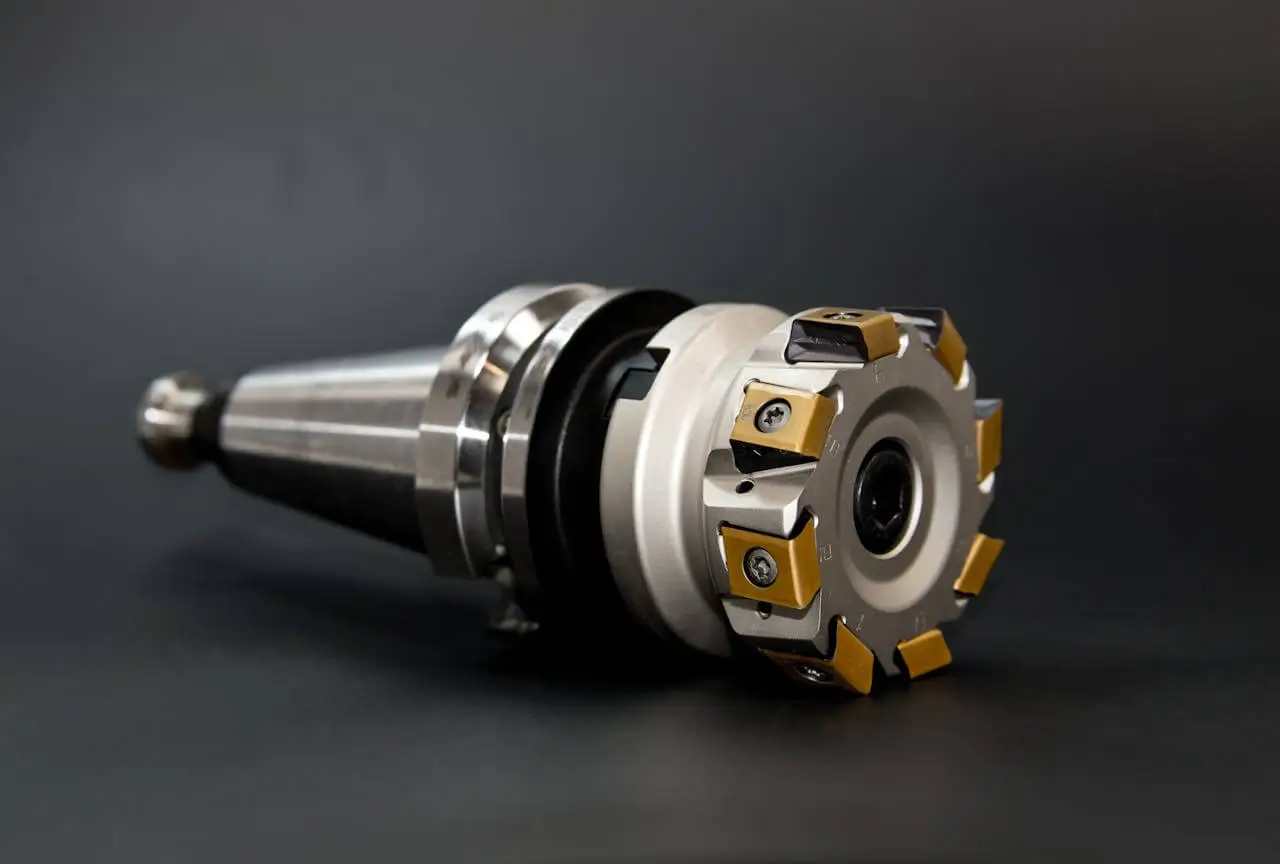
CNC milling is a subtractive manufacturing process where a computer-controlled spindle removes material from a workpiece using pre-programmed toolpaths. The "computer numerical control" element is what separates it from conventional milling: every axis movement, feed rate, and depth-of-cut follows G-code instructions generated by CAD/CAM software, not an operator's hands.
Conventional machining uses the same physical principle - a rotating cutter removes stock - but requires a machinist to manually control axis movement, often through handwheels or levers. For experienced machinists, that's a craft. For manufacturers needing consistent output at volume, it's a liability.
The difference isn't just automation. It's the quality of decision-making at every micron of the cut.
Precision That Holds Across Every Single Part
Here's the thing most people miss: precision in conventional machining degrades over time. Operator fatigue is real. Tool wear is real. And when you're on hour six of a ten-hour run, the parts at the end of the shift often don't match the ones at the start.
CNC milling services close that gap. Modern systems routinely hold tolerances below 0.005 mm - consistently, across the entire production run. Toolpath optimization software compensates for thermal expansion, tool deflection, and cutting dynamics in real time, so the 500th part comes out the same as the first.
For industries like aerospace manufacturing, where a single out-of-spec component can trigger an entire assembly failure, this isn't a nice-to-have. It's non-negotiable. The same applies to medical device machining, where implants and surgical instruments must meet exacting FDA-regulated dimensional specs that leave no room for variance.
Repeatability tests across multi-axis CNC platforms consistently show variance below 0.005 mm. Conventional setups rarely achieve half that reliably, especially without constant operator correction.
Complex Geometry Isn't a Workaround Anymore
Conventional machining struggles when geometry gets complicated. Undercuts, internal cavities, compound curves - these either require multiple setups, custom fixturing, or they simply can't be achieved without hand-finishing. Each workaround adds time, introduces new error points, and inflates cost.
Multi-axis CNC milling changes the equation. A 5-axis machine can tilt and rotate the workpiece while cutting, reaching angles and geometries that would require four separate setups on a conventional mill - or simply can't be made at all. This capability is why aerospace turbine blades, orthopedic implants, and automotive mold cavities are almost exclusively CNC territory now.
Add-on capabilities like live tool milling and deep-hole drilling expand the range further. On a conventional lathe, adding milled features means moving the part to a second machine. On a CNC turning center with live tooling, that happens in one setup - tighter tolerances, less handling, fewer opportunities for error.
And this matters beyond just aerospace and medical. Consumer electronics housings, precision optical mounts, and custom fluid manifolds all benefit from the same multi-axis capability.

The Economics: Upfront Cost vs. Long-Term Reality
The honest answer is yes - CNC milling equipment costs more upfront than conventional machines. A capable machining center runs anywhere from $80,000 to over $500,000. A conventional Bridgeport-style mill might be $15,000 to $40,000.
That said, focusing on acquisition cost misses the full picture.
Conventional machining is labor-intensive by nature. Every part requires active operator time. CNC milling services, once programmed, run unattended or semi-attended - one operator can oversee multiple machines simultaneously. For high-volume production, that labor efficiency compounds quickly.
Material waste shrinks too. Optimized CAM toolpaths minimize excess stock removal, reduce cutting time, and extend tool life. Scrap rates on CNC work are measurably lower than conventional, which matters when you're machining titanium or Inconel at $80+ per kilogram.
Rework is where the real cost comparison becomes stark. A part made conventionally that fails inspection may require re-machining, re-inspection, and delayed delivery. CNC milling's consistency means rework events are rare - and when they do happen, the digital program is the first place you look, not a human's technique.
For both short prototype runs and large production volumes, the savings typically offset setup costs within the first few batches. The math works.
Flexibility That Doesn't Slow You Down
One underrated advantage of CNC milling services: the pivot is almost free.
Changing a conventional machine setup to run a new part might mean hours of fixturing, tooling changes, and test cuts. Changing a CNC program means loading a new file, running a dry cycle, and confirming the first part. That's often under an hour.
This agility matters enormously in contract manufacturing and custom machine shops, where the job mix changes constantly. Whether you're running aluminum housings this week and stainless flanges next week, the CNC platform adapts without the downtime penalty that conventional machining imposes.
The materials range is equally broad. CNC milling handles aluminum alloys, steel, stainless, titanium, Inconel, engineering plastics like PEEK and Delrin, and composite layups - often using the same machine with different tooling and parameters. Conventional machining can handle many of these too, but difficult-to-cut materials like Inconel demand the rigidity and control that only CNC spindle feedback can provide.
Where Conventional Machining Still Has a Role
It's worth being direct here: conventional machining isn't obsolete.
For single one-off repairs, for shops doing legacy maintenance work, or for situations where part geometry is dead simple and volume is genuinely one unit, a skilled machinist on a manual mill is often faster and cheaper than programming a CNC job. There's also an important role for conventional machines in training - understanding manual tool control builds intuition that CNC operators genuinely benefit from.
The comparison breaks down in conventional machining's favor primarily at very low volumes, very simple geometry, and where programming setup time would exceed actual cutting time. Outside those conditions, CNC wins on almost every measurable dimension.
The manufacturing case for CNC milling services isn't really about which machine is newer. It's about which approach delivers reliable, scalable precision - and the evidence points one direction. If your work demands consistent tolerances, complex geometry, or high-volume repeatability, CNC is where your production belongs. The question isn't whether to make the transition; it's how quickly you can justify the setup.
Frequently Asked Questions
Q: What is CNC milling?
A: CNC milling is a subtractive manufacturing process where computer-controlled cutting tools remove material from a workpiece based on pre-programmed G-code instructions. It's part of the broader computer numerical control (CNC) machining category and is used across aerospace, medical, automotive, and consumer industries.
Q: How accurate is CNC milling compared to conventional machining?
A: CNC milling consistently holds tolerances below 0.005 mm with minimal variation across a full production run. Conventional machining accuracy depends heavily on operator skill and degrades with fatigue; achieving comparable tolerances reliably over volume is difficult.
Q: Is CNC milling cost-effective for small runs?
A: Yes, for most geometries. While setup programming takes time, modern CAM software has reduced that significantly. Even small prototype runs benefit from CNC's repeatability, and the reduced scrap and rework often more than offset setup cost compared to conventional methods.
Q: What materials can CNC milling services machine?
A: CNC milling handles a wide range: aluminum, steel, stainless steel, titanium, Inconel, brass, copper, engineering plastics (PEEK, Delrin, nylon), and composites. Hard-to-cut materials like titanium and Inconel particularly benefit from CNC's rigidity and consistent toolpath control.
Q: What's the difference between 3-axis and 5-axis CNC milling?
A: 3-axis CNC milling moves on X, Y, and Z axes, suitable for most prismatic parts. 5-axis machines add rotational movement on two additional axes, enabling complex undercuts, compound curves, and aerospace-grade geometries that would otherwise require multiple setups or be physically impossible.
Q: How long does it take to program a CNC milling job?
A: Programming time varies by complexity. Simple 2.5D parts might take 30–60 minutes in CAM software. Complex 5-axis aerospace components could require several hours. Once programmed, the same job can be rerun instantly - so programming cost is a one-time investment.
Quick Answer: CNC milling services use computer numerical control to automate cutting operations with tolerances below 0.005 mm, making them far more precise, repeatable, and cost-efficient than conventional machining for both prototype and production work. They handle complex geometries, run 24/7, and easily adapt to new designs - advantages conventional methods simply can't match at scale.
Most manufacturers don't switch from conventional machining because they're chasing trends. They switch because they've run the numbers - and the gap is hard to ignore.
Conventional machining relies on skilled operators making real-time judgments at the spindle. That's fine for one-offs, repairs, or legacy work. But the moment you need 500 identical brackets with a 0.003 mm positional tolerance, human judgment becomes your bottleneck. CNC milling services remove that bottleneck entirely - and the downstream effects ripple across every part of your operation.
Here's what that actually looks like in practice.
What CNC Milling Services Actually Do Differently
CNC milling is a subtractive manufacturing process where a computer-controlled spindle removes material from a workpiece using pre-programmed toolpaths. The "computer numerical control" element is what separates it from conventional milling: every axis movement, feed rate, and depth-of-cut follows G-code instructions generated by CAD/CAM software, not an operator's hands.
Conventional machining uses the same physical principle - a rotating cutter removes stock - but requires a machinist to manually control axis movement, often through handwheels or levers. For experienced machinists, that's a craft. For manufacturers needing consistent output at volume, it's a liability.
The difference isn't just automation. It's the quality of decision-making at every micron of the cut.
Precision That Holds Across Every Single Part
Here's the thing most people miss: precision in conventional machining degrades over time. Operator fatigue is real. Tool wear is real. And when you're on hour six of a ten-hour run, the parts at the end of the shift often don't match the ones at the start.
CNC milling services close that gap. Modern systems routinely hold tolerances below 0.005 mm - consistently, across the entire production run. Toolpath optimization software compensates for thermal expansion, tool deflection, and cutting dynamics in real time, so the 500th part comes out the same as the first.
For industries like aerospace manufacturing, where a single out-of-spec component can trigger an entire assembly failure, this isn't a nice-to-have. It's non-negotiable. The same applies to medical device machining, where implants and surgical instruments must meet exacting FDA-regulated dimensional specs that leave no room for variance.
Repeatability tests across multi-axis CNC platforms consistently show variance below 0.005 mm. Conventional setups rarely achieve half that reliably, especially without constant operator correction.
Complex Geometry Isn't a Workaround Anymore
Conventional machining struggles when geometry gets complicated. Undercuts, internal cavities, compound curves - these either require multiple setups, custom fixturing, or they simply can't be achieved without hand-finishing. Each workaround adds time, introduces new error points, and inflates cost.
Multi-axis CNC milling changes the equation. A 5-axis machine can tilt and rotate the workpiece while cutting, reaching angles and geometries that would require four separate setups on a conventional mill - or simply can't be made at all. This capability is why aerospace turbine blades, orthopedic implants, and automotive mold cavities are almost exclusively CNC territory now.
Add-on capabilities like live tool milling and deep-hole drilling expand the range further. On a conventional lathe, adding milled features means moving the part to a second machine. On a CNC turning center with live tooling, that happens in one setup - tighter tolerances, less handling, fewer opportunities for error.
And this matters beyond just aerospace and medical. Consumer electronics housings, precision optical mounts, and custom fluid manifolds all benefit from the same multi-axis capability.
The Economics: Upfront Cost vs. Long-Term Reality
The honest answer is yes - CNC milling equipment costs more upfront than conventional machines. A capable machining center runs anywhere from $80,000 to over $500,000. A conventional Bridgeport-style mill might be $15,000 to $40,000.
That said, focusing on acquisition cost misses the full picture.
Conventional machining is labor-intensive by nature. Every part requires active operator time. CNC milling services, once programmed, run unattended or semi-attended - one operator can oversee multiple machines simultaneously. For high-volume production, that labor efficiency compounds quickly.
Material waste shrinks too. Optimized CAM toolpaths minimize excess stock removal, reduce cutting time, and extend tool life. Scrap rates on CNC work are measurably lower than conventional, which matters when you're machining titanium or Inconel at $80+ per kilogram.
Rework is where the real cost comparison becomes stark. A part made conventionally that fails inspection may require re-machining, re-inspection, and delayed delivery. CNC milling's consistency means rework events are rare - and when they do happen, the digital program is the first place you look, not a human's technique.
For both short prototype runs and large production volumes, the savings typically offset setup costs within the first few batches. The math works.
Flexibility That Doesn't Slow You Down
One underrated advantage of CNC milling services: the pivot is almost free.
Changing a conventional machine setup to run a new part might mean hours of fixturing, tooling changes, and test cuts. Changing a CNC program means loading a new file, running a dry cycle, and confirming the first part. That's often under an hour.
This agility matters enormously in contract manufacturing and custom machine shops, where the job mix changes constantly. Whether you're running aluminum housings this week and stainless flanges next week, the CNC platform adapts without the downtime penalty that conventional machining imposes.
The materials range is equally broad. CNC milling handles aluminum alloys, steel, stainless, titanium, Inconel, engineering plastics like PEEK and Delrin, and composite layups - often using the same machine with different tooling and parameters. Conventional machining can handle many of these too, but difficult-to-cut materials like Inconel demand the rigidity and control that only CNC spindle feedback can provide.
Where Conventional Machining Still Has a Role
It's worth being direct here: conventional machining isn't obsolete.
For single one-off repairs, for shops doing legacy maintenance work, or for situations where part geometry is dead simple and volume is genuinely one unit, a skilled machinist on a manual mill is often faster and cheaper than programming a CNC job. There's also an important role for conventional machines in training - understanding manual tool control builds intuition that CNC operators genuinely benefit from.
The comparison breaks down in conventional machining's favor primarily at very low volumes, very simple geometry, and where programming setup time would exceed actual cutting time. Outside those conditions, CNC wins on almost every measurable dimension.
The manufacturing case for CNC milling services isn't really about which machine is newer. It's about which approach delivers reliable, scalable precision - and the evidence points one direction. If your work demands consistent tolerances, complex geometry, or high-volume repeatability, CNC is where your production belongs. The question isn't whether to make the transition; it's how quickly you can justify the setup.
Frequently Asked Questions
Q: What is CNC milling?
A: CNC milling is a subtractive manufacturing process where computer-controlled cutting tools remove material from a workpiece based on pre-programmed G-code instructions. It's part of the broader computer numerical control (CNC) machining category and is used across aerospace, medical, automotive, and consumer industries.
Q: How accurate is CNC milling compared to conventional machining?
A: CNC milling consistently holds tolerances below 0.005 mm with minimal variation across a full production run. Conventional machining accuracy depends heavily on operator skill and degrades with fatigue; achieving comparable tolerances reliably over volume is difficult.
Q: Is CNC milling cost-effective for small runs?
A: Yes, for most geometries. While setup programming takes time, modern CAM software has reduced that significantly. Even small prototype runs benefit from CNC's repeatability, and the reduced scrap and rework often more than offset setup cost compared to conventional methods.
Q: What materials can CNC milling services machine?
A: CNC milling handles a wide range: aluminum, steel, stainless steel, titanium, Inconel, brass, copper, engineering plastics (PEEK, Delrin, nylon), and composites. Hard-to-cut materials like titanium and Inconel particularly benefit from CNC's rigidity and consistent toolpath control.
Q: What's the difference between 3-axis and 5-axis CNC milling?
A: 3-axis CNC milling moves on X, Y, and Z axes, suitable for most prismatic parts. 5-axis machines add rotational movement on two additional axes, enabling complex undercuts, compound curves, and aerospace-grade geometries that would otherwise require multiple setups or be physically impossible.
Q: How long does it take to program a CNC milling job?
A: Programming time varies by complexity. Simple 2.5D parts might take 30–60 minutes in CAM software. Complex 5-axis aerospace components could require several hours. Once programmed, the same job can be rerun instantly - so programming cost is a one-time investment.
Please follow and like us:

Sort By:

Outsourcing vs. In-House Machining: What Actually Makes Sense for Your Business?

Tungsten Carbide Machining: Expert Tips, Techniques, and Best Practices for Precision Results

Graphite Machining: Processes, Challenges, Applications and Precision Services

Advanced Carbide Ceramics Machining: Why These Materials Rule in Extreme Conditions

Why Aerospace CNC Machining Really Needs a Different kind of Precision
Why Titanium Is Dominant in Aerospace CNC Machining
Related Blog Posts
Jun 27, 2026
Tungsten Carbide Machining: Expert Tips, Techniques, and Best Practices for Precision Results
Explore tungsten carbide machining challenges, best practices, and precision techniques for producing durable, high-performance components.
Jun 27, 2026
Tungsten Carbide Machining: Expert Tips, Techniques, and Best Practices for Precision Results
Explore tungsten carbide machining challenges, best practices, and precision techniques for producing durable, high-performance components.
Jun 27, 2026
Graphite Machining: Processes, Challenges, Applications and Precision Services
Learn graphite machining processes, key challenges, industrial applications, and how precision CNC machining delivers reliable, high-quality parts.
Jun 27, 2026
Graphite Machining: Processes, Challenges, Applications and Precision Services
Learn graphite machining processes, key challenges, industrial applications, and how precision CNC machining delivers reliable, high-quality parts.
Jun 27, 2026
Advanced Carbide Ceramics Machining: Why These Materials Rule in Extreme Conditions
Learn how precision machining of boron carbide, silicon carbide, and titanium carbide delivers exceptional wear resistance, heat tolerance, and accuracy.
Jun 27, 2026
Advanced Carbide Ceramics Machining: Why These Materials Rule in Extreme Conditions
Learn how precision machining of boron carbide, silicon carbide, and titanium carbide delivers exceptional wear resistance, heat tolerance, and accuracy.
Jun 27, 2026
Tungsten Carbide Machining: Expert Tips, Techniques, and Best Practices for Precision Results
Explore tungsten carbide machining challenges, best practices, and precision techniques for producing durable, high-performance components.
Jun 27, 2026
Graphite Machining: Processes, Challenges, Applications and Precision Services
Learn graphite machining processes, key challenges, industrial applications, and how precision CNC machining delivers reliable, high-quality parts.