Table of Content
Title
ER Machining, provides emergency machining services on any request.
Fast turnaround! · Call or email us!
Contact Us!
How ER Machining Is Paving Way with Aerospace Machining
CNC Machining
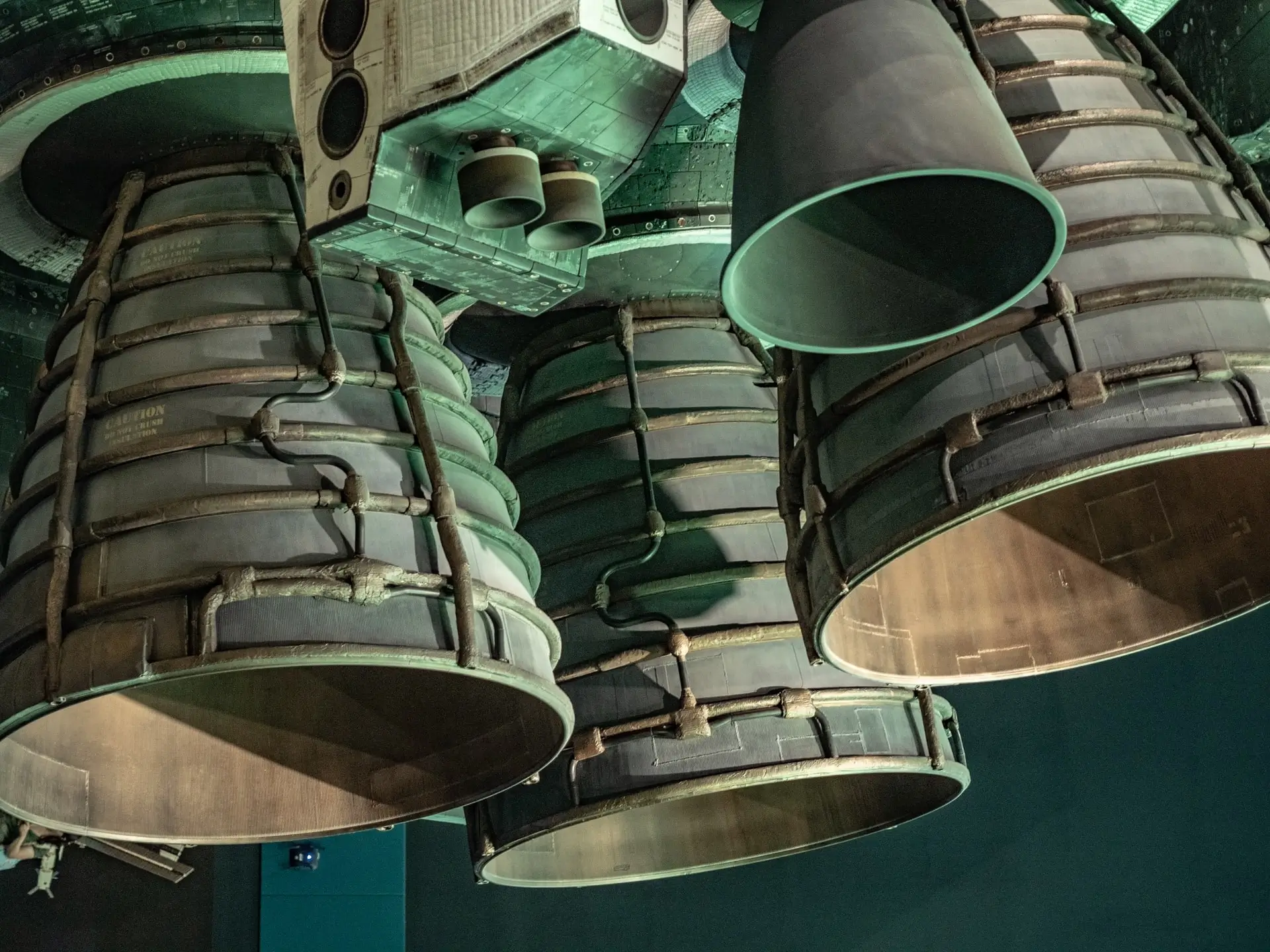
Quick Answer: ER Machining is a Houston-based CNC machine shop offering high-precision aerospace machining services with tolerances as tight as 0.002 mm. Specializing in five-axis machining, turn-mill operations, titanium and Inconel alloy parts, and rapid prototyping, ER Machining delivers custom aerospace components under one roof with turnaround as fast as three days.
Aerospace machining doesn't forgive mistakes. A tolerance deviation of a few thousandths of a millimeter on a turbine blade or structural bracket isn't a quality issue. It's a safety issue. That's the pressure every aerospace machine shop works under, and it's why not every shop can do this work credibly.
ER Machining, based in Houston, Texas, has built its reputation specifically around getting this right. For aerospace manufacturers and engineering teams looking for a precision CNC machining partner, the difference between a general machine shop and a specialist becomes clear fast.
What Makes Aerospace Machining Different from Standard CNC Work
Most CNC machining operates within tolerances that a skilled operator can maintain consistently across a standard shift. Aerospace machining is a different discipline entirely.
Here's the thing most people miss: it's not just about the machines. It's about the environment, the materials, and the feedback loops that catch deviations before they reach a finished part. Temperature fluctuations between a morning and afternoon shift can cause certain aerospace alloys to expand or contract enough to push a dimension out of spec. That's not a hypothetical. It's a daily reality on the shop floor.
Aerospace machining uses materials that standard shops rarely touch. Lightweight aluminum works well for structural members where weight reduction matters most. Titanium and Inconel alloys handle the extreme heat and stress loads found in engine components. Carbon-fiber composites provide the strength-to-weight ratio needed for outer airframe skins. Each material behaves differently under cutting forces, and each demands a specific machining approach. ER Machining's team works with all of these routinely, which is what separates a capable shop from a qualified one.
ER Machining's Capabilities: One Roof, Full Process Control
Some aerospace suppliers piece together their processes across multiple vendors. One shop does the rough machining, another handles finishing, a third does inspection. That handoff model introduces variation at every transfer point.
ER Machining operates differently. As a one-stop CNC machining shop, every stage of the manufacturing process happens in-house: milling, turning, grinding, welding, inspection, and finishing. This matters for aerospace work specifically because it eliminates the tolerance stack-up risk that comes from splitting a job across facilities.
The shop runs five-axis machining centers capable of producing complex contoured surfaces in a single setup, reducing the repositioning errors that accumulate when a part has to be moved and re-fixtured. Turn-mill machines handle parts that require both rotational and prismatic features without swapping between machines. Precision grinders finish surfaces to the fine tolerances aerospace applications require.
For milling operations alone, ER Machining performs plane, vertical, and face milling. The right operation for a given surface depends on the geometry, the material, and the tolerance band on the drawing. Their machinists select and apply these not by default, but by what the part actually demands.
Tight Tolerances: What They Mean and Why ER Machining Prioritizes Them
Tolerance is the acceptable dimensional variation from the design specification. A drawing might call for a bore diameter of 25.000 mm with a tolerance of plus or minus 0.005 mm. That means anything from 24.995 mm to 25.005 mm is acceptable. Tighter tolerances narrow that band, leaving less margin for process variation.
And this is where it gets interesting. Softer materials are actually harder to hold to tight tolerances. A workpiece that flexes under cutting forces moves away from the tool as it cuts, then springs back. The result is a surface that measures differently under load than at rest. Aerospace machining engineers design fixturing and cutting strategies specifically to account for this behavior. ER Machining's team brings this expertise to every job.
Their high-precision CNC machining keeps dimensional deviation to a minimum, which translates directly to parts that fit correctly on assembly, perform as designed under load, and don't introduce vibration or fatigue risks into the larger system. For aircraft, that last point isn't a quality metric. It's the whole point.

Rapid Prototyping, Reverse Engineering, and Getting to Production Faster
Aerospace development cycles have compressed. New component designs that once took months to move from drawing to prototype now need to happen in weeks. ER Machining supports this through rapid prototyping and reverse engineering capabilities that let engineering teams iterate on physical parts rather than simulations alone.
Reverse engineering allows ER Machining to work from an existing part when original drawings aren't available. This is common in MRO (maintenance, repair, and overhaul) work where legacy components need replacement but documentation no longer exists.
Rapid prototyping takes a new design from drawing to physical part, often within three days. Those prototype parts can then be evaluated using Finite Element Analysis (FEA) to predict stress distribution, fatigue life, and failure modes before committing to production tooling. The feedback loop between physical part and FEA simulation is where most design flaws surface, and it's far cheaper to find them there than during a fleet inspection.
Quality Systems and Tooling That Support Aerospace Standards
Aerospace manufacturing operates under strict quality frameworks. AS9100 certification, NADCAP approvals, and customer-specific quality plans define what "acceptable" means for a given program. ER Machining's in-house tool rooms, workflow software, and inspection processes support these standards throughout the production cycle.
High-quality tooling directly affects the achievable tolerance and surface finish on any given operation. Worn tooling doesn't just produce worse parts. It produces unpredictably worse parts, which is exactly what aerospace programs can't absorb. ER Machining's tool room management keeps cutting tools in controlled condition so the process remains stable across a production run.
Inspection happens throughout the process, not just at the end. Dimensional verification on in-process parts catches deviations before they compound, which saves material, time, and the cost of scrapping a near-finished component.
Who ER Machining Serves and Why Scale Doesn't Limit Them
Whether a client is a startup developing a new UAV component or an established aerospace OEM sourcing secondary supplier capacity, ER Machining's shop handles both ends of the scale. Small-batch prototype runs and higher-volume production quantities both move through the same quality system and the same inspection protocols.
The single-facility model helps here too. There's no scale point at which jobs get routed to a different, less-capable shop. The equipment, the team, and the quality controls stay consistent regardless of order size.
For aerospace companies in and around Houston, and for programs that need a reliable West Gulf Coast machining partner, ER Machining's combination of material capability, precision equipment, and in-house process control makes a strong case.
Frequently Asked Questions
Q: What types of aerospace components can ER Machining produce?
Q: How tight are the tolerances ER Machining can hold on aerospace parts?
Q: How fast can ER Machining turn around a prototype aerospace part?
Q: Does ER Machining offer FEA analysis alongside machining?
Q: Why use ER Machining instead of splitting aerospace work across multiple suppliers?
Quick Answer: ER Machining is a Houston-based CNC machine shop offering high-precision aerospace machining services with tolerances as tight as 0.002 mm. Specializing in five-axis machining, turn-mill operations, titanium and Inconel alloy parts, and rapid prototyping, ER Machining delivers custom aerospace components under one roof with turnaround as fast as three days.
Aerospace machining doesn't forgive mistakes. A tolerance deviation of a few thousandths of a millimeter on a turbine blade or structural bracket isn't a quality issue. It's a safety issue. That's the pressure every aerospace machine shop works under, and it's why not every shop can do this work credibly.
ER Machining, based in Houston, Texas, has built its reputation specifically around getting this right. For aerospace manufacturers and engineering teams looking for a precision CNC machining partner, the difference between a general machine shop and a specialist becomes clear fast.
What Makes Aerospace Machining Different from Standard CNC Work
Most CNC machining operates within tolerances that a skilled operator can maintain consistently across a standard shift. Aerospace machining is a different discipline entirely.
Here's the thing most people miss: it's not just about the machines. It's about the environment, the materials, and the feedback loops that catch deviations before they reach a finished part. Temperature fluctuations between a morning and afternoon shift can cause certain aerospace alloys to expand or contract enough to push a dimension out of spec. That's not a hypothetical. It's a daily reality on the shop floor.
Aerospace machining uses materials that standard shops rarely touch. Lightweight aluminum works well for structural members where weight reduction matters most. Titanium and Inconel alloys handle the extreme heat and stress loads found in engine components. Carbon-fiber composites provide the strength-to-weight ratio needed for outer airframe skins. Each material behaves differently under cutting forces, and each demands a specific machining approach. ER Machining's team works with all of these routinely, which is what separates a capable shop from a qualified one.
ER Machining's Capabilities: One Roof, Full Process Control
Some aerospace suppliers piece together their processes across multiple vendors. One shop does the rough machining, another handles finishing, a third does inspection. That handoff model introduces variation at every transfer point.
ER Machining operates differently. As a one-stop CNC machining shop, every stage of the manufacturing process happens in-house: milling, turning, grinding, welding, inspection, and finishing. This matters for aerospace work specifically because it eliminates the tolerance stack-up risk that comes from splitting a job across facilities.
The shop runs five-axis machining centers capable of producing complex contoured surfaces in a single setup, reducing the repositioning errors that accumulate when a part has to be moved and re-fixtured. Turn-mill machines handle parts that require both rotational and prismatic features without swapping between machines. Precision grinders finish surfaces to the fine tolerances aerospace applications require.
For milling operations alone, ER Machining performs plane, vertical, and face milling. The right operation for a given surface depends on the geometry, the material, and the tolerance band on the drawing. Their machinists select and apply these not by default, but by what the part actually demands.
Tight Tolerances: What They Mean and Why ER Machining Prioritizes Them
Tolerance is the acceptable dimensional variation from the design specification. A drawing might call for a bore diameter of 25.000 mm with a tolerance of plus or minus 0.005 mm. That means anything from 24.995 mm to 25.005 mm is acceptable. Tighter tolerances narrow that band, leaving less margin for process variation.
And this is where it gets interesting. Softer materials are actually harder to hold to tight tolerances. A workpiece that flexes under cutting forces moves away from the tool as it cuts, then springs back. The result is a surface that measures differently under load than at rest. Aerospace machining engineers design fixturing and cutting strategies specifically to account for this behavior. ER Machining's team brings this expertise to every job.
Their high-precision CNC machining keeps dimensional deviation to a minimum, which translates directly to parts that fit correctly on assembly, perform as designed under load, and don't introduce vibration or fatigue risks into the larger system. For aircraft, that last point isn't a quality metric. It's the whole point.
Rapid Prototyping, Reverse Engineering, and Getting to Production Faster
Aerospace development cycles have compressed. New component designs that once took months to move from drawing to prototype now need to happen in weeks. ER Machining supports this through rapid prototyping and reverse engineering capabilities that let engineering teams iterate on physical parts rather than simulations alone.
Reverse engineering allows ER Machining to work from an existing part when original drawings aren't available. This is common in MRO (maintenance, repair, and overhaul) work where legacy components need replacement but documentation no longer exists.
Rapid prototyping takes a new design from drawing to physical part, often within three days. Those prototype parts can then be evaluated using Finite Element Analysis (FEA) to predict stress distribution, fatigue life, and failure modes before committing to production tooling. The feedback loop between physical part and FEA simulation is where most design flaws surface, and it's far cheaper to find them there than during a fleet inspection.
Quality Systems and Tooling That Support Aerospace Standards
Aerospace manufacturing operates under strict quality frameworks. AS9100 certification, NADCAP approvals, and customer-specific quality plans define what "acceptable" means for a given program. ER Machining's in-house tool rooms, workflow software, and inspection processes support these standards throughout the production cycle.
High-quality tooling directly affects the achievable tolerance and surface finish on any given operation. Worn tooling doesn't just produce worse parts. It produces unpredictably worse parts, which is exactly what aerospace programs can't absorb. ER Machining's tool room management keeps cutting tools in controlled condition so the process remains stable across a production run.
Inspection happens throughout the process, not just at the end. Dimensional verification on in-process parts catches deviations before they compound, which saves material, time, and the cost of scrapping a near-finished component.
Who ER Machining Serves and Why Scale Doesn't Limit Them
Whether a client is a startup developing a new UAV component or an established aerospace OEM sourcing secondary supplier capacity, ER Machining's shop handles both ends of the scale. Small-batch prototype runs and higher-volume production quantities both move through the same quality system and the same inspection protocols.
The single-facility model helps here too. There's no scale point at which jobs get routed to a different, less-capable shop. The equipment, the team, and the quality controls stay consistent regardless of order size.
For aerospace companies in and around Houston, and for programs that need a reliable West Gulf Coast machining partner, ER Machining's combination of material capability, precision equipment, and in-house process control makes a strong case.
Frequently Asked Questions
Q: What types of aerospace components can ER Machining produce?
Q: How tight are the tolerances ER Machining can hold on aerospace parts?
Q: How fast can ER Machining turn around a prototype aerospace part?
Q: Does ER Machining offer FEA analysis alongside machining?
Q: Why use ER Machining instead of splitting aerospace work across multiple suppliers?
Please follow and like us:

Sort By:

Outsourcing vs. In-House Machining: What Actually Makes Sense for Your Business?

Tungsten Carbide Machining: Expert Tips, Techniques, and Best Practices for Precision Results

Graphite Machining: Processes, Challenges, Applications and Precision Services

Advanced Carbide Ceramics Machining: Why These Materials Rule in Extreme Conditions

Why Aerospace CNC Machining Really Needs a Different kind of Precision
Why Titanium Is Dominant in Aerospace CNC Machining
Related Blog Posts
Jun 27, 2026
Tungsten Carbide Machining: Expert Tips, Techniques, and Best Practices for Precision Results
Explore tungsten carbide machining challenges, best practices, and precision techniques for producing durable, high-performance components.
Jun 27, 2026
Tungsten Carbide Machining: Expert Tips, Techniques, and Best Practices for Precision Results
Explore tungsten carbide machining challenges, best practices, and precision techniques for producing durable, high-performance components.
Jun 27, 2026
Graphite Machining: Processes, Challenges, Applications and Precision Services
Learn graphite machining processes, key challenges, industrial applications, and how precision CNC machining delivers reliable, high-quality parts.
Jun 27, 2026
Graphite Machining: Processes, Challenges, Applications and Precision Services
Learn graphite machining processes, key challenges, industrial applications, and how precision CNC machining delivers reliable, high-quality parts.
Jun 27, 2026
Advanced Carbide Ceramics Machining: Why These Materials Rule in Extreme Conditions
Learn how precision machining of boron carbide, silicon carbide, and titanium carbide delivers exceptional wear resistance, heat tolerance, and accuracy.
Jun 27, 2026
Advanced Carbide Ceramics Machining: Why These Materials Rule in Extreme Conditions
Learn how precision machining of boron carbide, silicon carbide, and titanium carbide delivers exceptional wear resistance, heat tolerance, and accuracy.
Jun 27, 2026
Tungsten Carbide Machining: Expert Tips, Techniques, and Best Practices for Precision Results
Explore tungsten carbide machining challenges, best practices, and precision techniques for producing durable, high-performance components.
Jun 27, 2026
Graphite Machining: Processes, Challenges, Applications and Precision Services
Learn graphite machining processes, key challenges, industrial applications, and how precision CNC machining delivers reliable, high-quality parts.